The History of Scottsdale, Arizona — Decade by Decade
From a chaplain's 640-acre homestead beside a hand-dug canal to a city of a quarter-million people, Scottsdale's story spans less than 140 years — and almost none of it went the way anyone planned. This is the full record, one decade at a time.
Scottsdale sits on land that was farmed for a thousand years before any American saw it. The Hohokam engineered more than 500 miles of irrigation canals through the Salt River Valley between roughly the first century and 1450 CE, then vanished from the archaeological record — leaving ditches so well-graded that nineteenth-century settlers simply dug them out and used them again. When U.S. Army chaplain Winfield Scott paid the first $320 on a 640-acre claim east of Phoenix in 1888, he was planting citrus and figs in soil the desert had already been taught to water.
What followed was a series of reinventions, each improbable: a temperance farm colony, a health-seeker's tent city, a cotton boomtown, a playground of dude ranches and polo fields, a WWII pilot-training and POW-camp neighbor, a postwar boomtown that grew its population roughly tenfold in a single decade, an arts-and-resort capital styled "The West's Most Western Town," and finally a desert metropolis that voted — twice — to tax itself to keep a third of its land wild. Each decade below is a full long-form chapter with a timeline, key facts, historic images, and the questions people actually ask.
How this archive works: the story is told at four depths — seven eras for the sweep, 17 chapters for the narrative (a thousand years before the claim, then every decade since), a page for every year since 1888 for the record, and landmark day pages for the moments that changed everything. Start anywhere; every page links up and down the chain.
Politics & society, decade by decade
Who governed, what was argued and by whom, how the votes went, and who organized, from the 1888 claim to today.
The LedgerEconomy, land & people, decade by decade
What water, land, homes and work cost, who built what and who lived here, from the Hohokam canals on, every number sourced and charted, with a monthly record of home sales today.
The forksThe decisions that made Scottsdale
Twelve choices that could have gone another way, with what was on the table instead and what each one locked in.
The placesLost Scottsdale, decade by decade
All 302 closed places in the guide, from restaurants and resorts to cinemas, golf courses and events, filed under the decade each one opened.
The wordsThe Scottsdale lexicon
The slogans, nicknames and place names locals use without explaining, with who coined each one and whether it stuck.
The seven eras
The largest chapters of the story — from the Hohokam canals to the current argument about what comes next.
- Before 1888 1
The Ancient Desert
For a thousand years before any land filing, this valley was one of the most intensively farmed places in ancient North America — and for four centuries after that it was two peoples' homeland, claimed by three empires that never arrived.
Enter the era → - 1888–1909 2
Founding & Pioneer Years
Twenty-one years from a $2.50-an-acre land filing to a brick schoolhouse, a resort, and a dam rising upstream.
Enter the era → - 1910–1929 3
Statehood & the Farm Town
The dam delivers, Arizona joins the union, cotton makes and breaks fortunes — and a town of a thousand quietly discovers tourists.
Enter the era → - 1930–1949 4
Dude Ranches & the War Years
The bank fails, the guest ranches fill, the world's most famous architect moves in — and then the war drops an airfield on the alfalfa.
Enter the era → - 1950–1979 5
Boomtown: The West's Most Western Town
From 2,000 people to 88,000 in three decades — while inventing a brand, shutting out new billboards, and beating the Army Corps with grass.
Enter the era → - 1980–2009 6
The Resort Metropolis
Three decades of scale: resorts the size of villages, a world-class clinic, a preserve bought at retail — and a crash to end the run.
Enter the era → - 2010–present 7
The New West
A diversified desert metropolis with locked-away mountains — arguing, loudly and productively, about height, water, and identity.
Enter the era →
From the Hohokam to today, at a glance
- To 1450 The Hohokam Millennium
- 1450–1887 Homelands & the American Approach
- 1880s The Founding Era
- 1890s The Settlement Takes a Name
- 1900s Water, Lungers & Brick
- 1910s Statehood & Cotton
- 1920s Merchants & First Tourists
- 1930s Dude Ranches & Wright
- 1940s War Comes to the Desert
- 1950s The West's Most Western Town
- 1960s The Boom Decade
- 1970s The Greenbelt Gamble
- 1980s Resorts & the Push North
- 1990s Buying the Mountains
- 2000s Condos, Canals & the Crash
- 2010s Recovery & the New West
- 2020s Growth on Trial
Read the chapters
The first 2 chapters cover the thousand years before Winfield Scott's claim; every decade since 1888 has a chapter of its own.
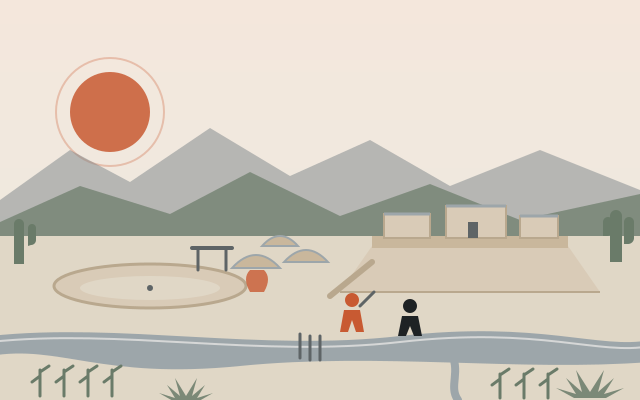
The Hohokam Millennium
Long before a chaplain filed on 640 acres, this valley held the largest irrigation system in ancient North America — and the McDowells held villages, ballcourts and rock art that are still up there.
Read the chapter →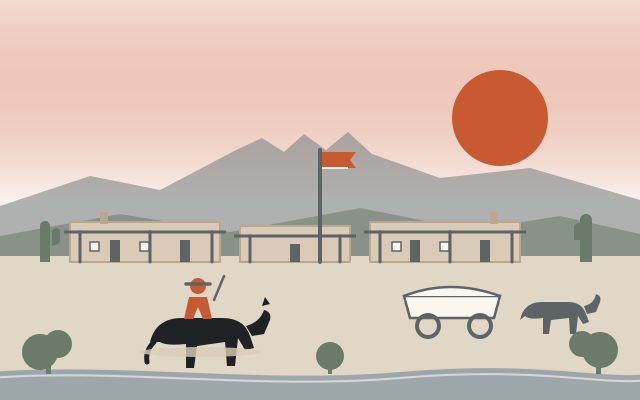
Homelands & the American Approach
For four hundred years the McDowells were Yavapai country and the rivers were O'odham country. Then, in twenty-two years, came a fort, a county, a reservation, a railroad and a canal — and the empty section a chaplain would buy.
Read the chapter →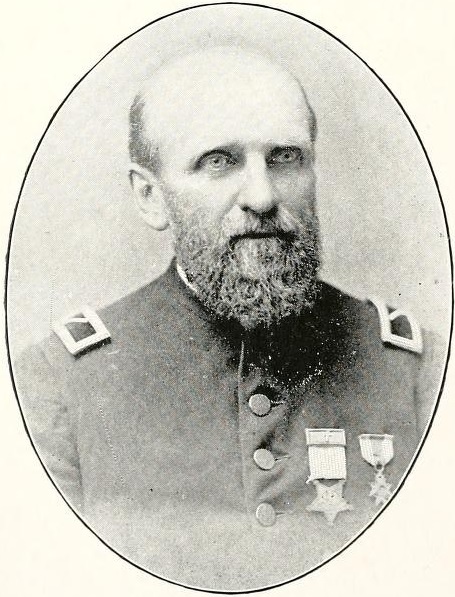
The Founding Era
A thousand years of Hohokam engineering, a brand-new canal, and an Army chaplain with $320 in earnest money — the unlikely ingredients that started a city.
Read the chapter →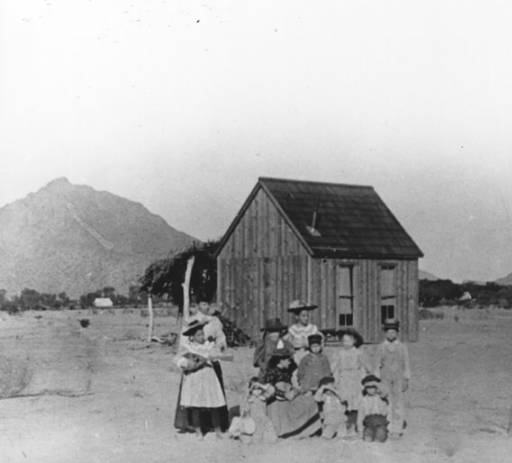
The Settlement Takes a Name
A dozen families, a fire, a drought — and somewhere in between, a Rhode Island banker's subdivision gets renamed for the chaplain next door.
Read the chapter →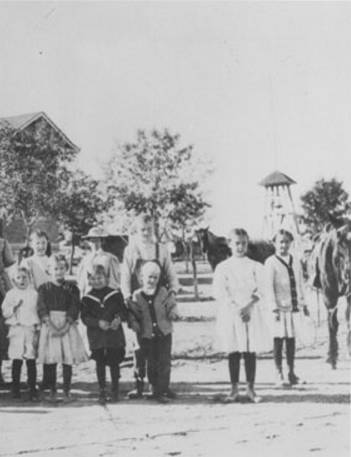
Water, Lungers & Brick
The decade opens with the canals nearly dry and closes with a federal dam rising, a resort taking reservations, and a brick schoolhouse, built on a $4,526 contract, that still stands today.
Read the chapter →
Statehood & Cotton
A president dedicates the dam, Arizona joins the union, and a war-driven cotton frenzy nearly quadruples the town — with new families who would build much of what Scottsdale became.
Read the chapter →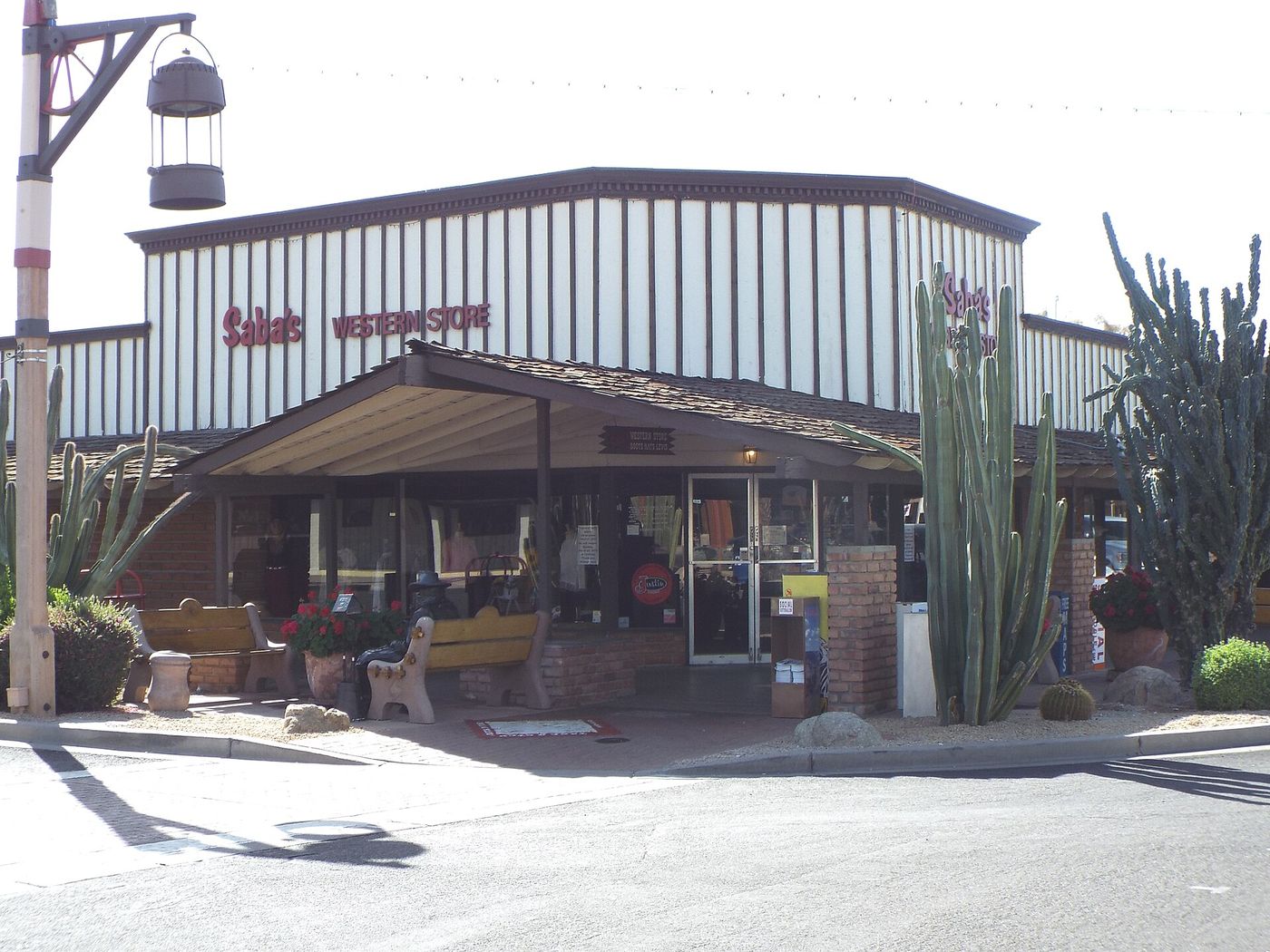
Merchants & First Tourists
The cotton economy detonates on schedule — and a town of 1,000 quietly reinvents itself with storefronts, a high school, polo grounds, and paying winter guests.
Read the chapter →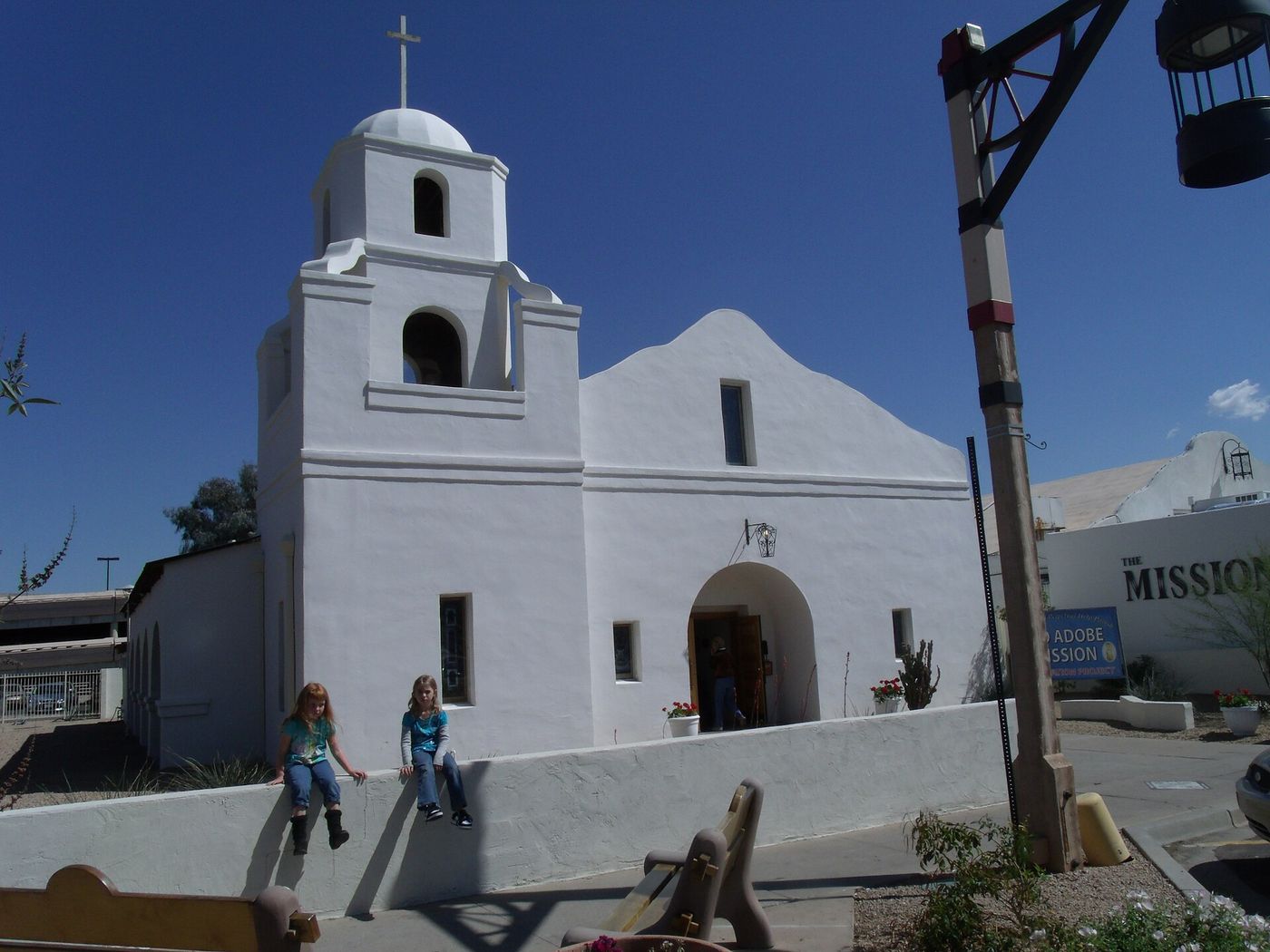
Dude Ranches & Wright
The Depression closes the bank but fills the guest ranches — and by decade's end the world's most famous architect is camped in the McDowell foothills.
Read the chapter →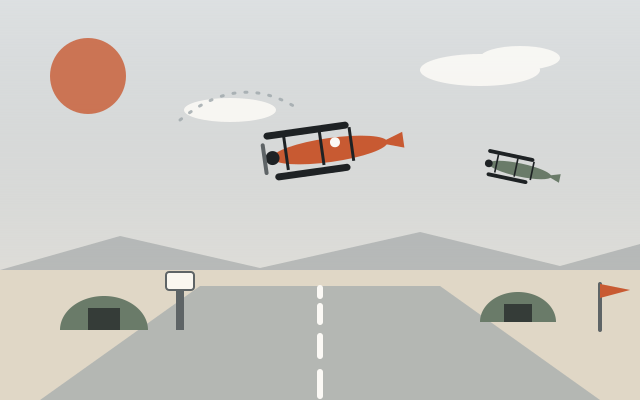
War Comes to the Desert
Stearman biplanes over the alfalfa, a POW escape the night before Christmas Eve, and a craft colony in an old general store — the decade that armed Scottsdale for takeoff.
Read the chapter →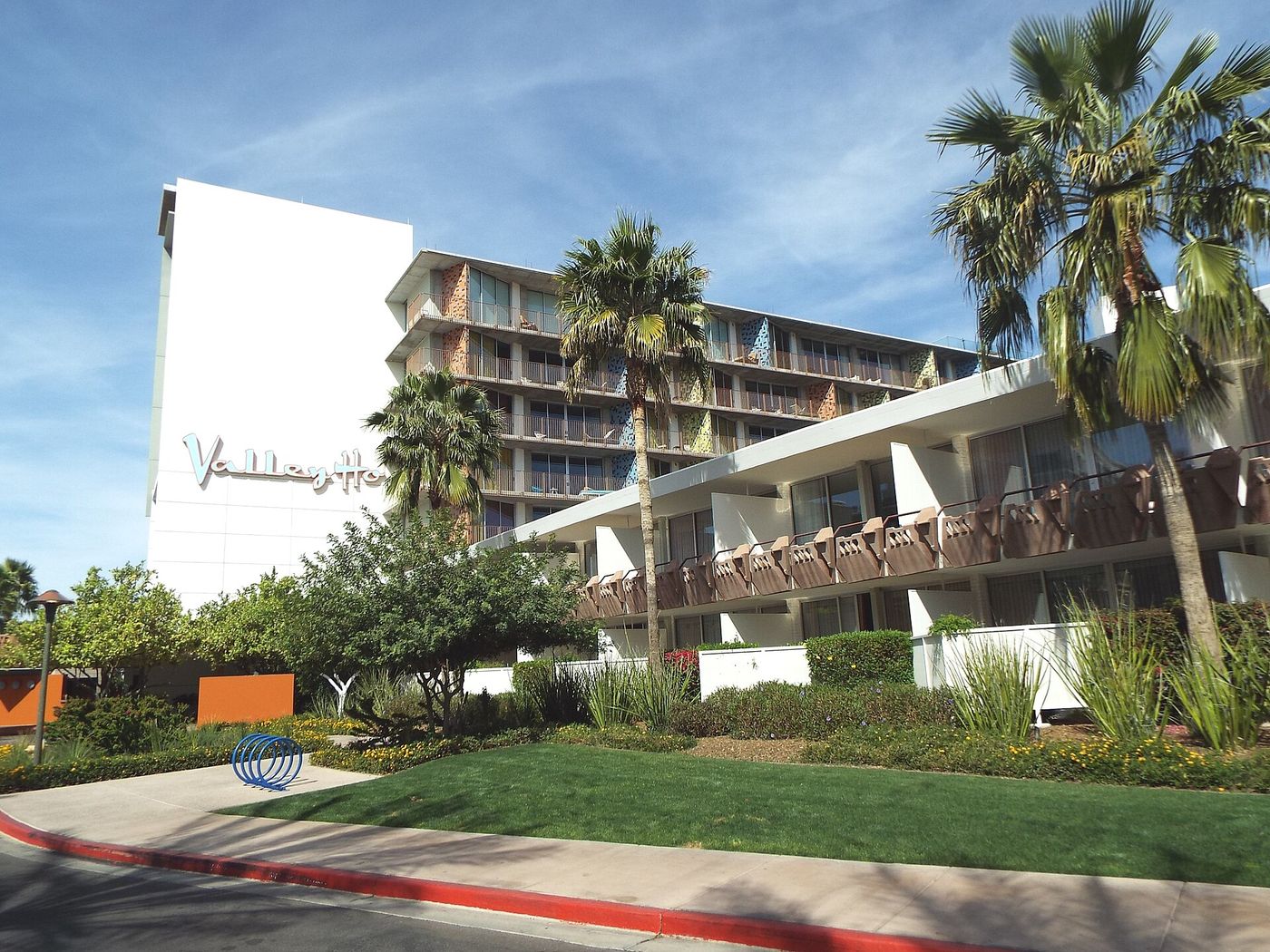
The West's Most Western Town
A town of 2,000 incorporates, brands itself with a rodeo and a slogan — and ends the decade five times bigger, with a Hollywood hotel and a payroll from Motorola.
Read the chapter →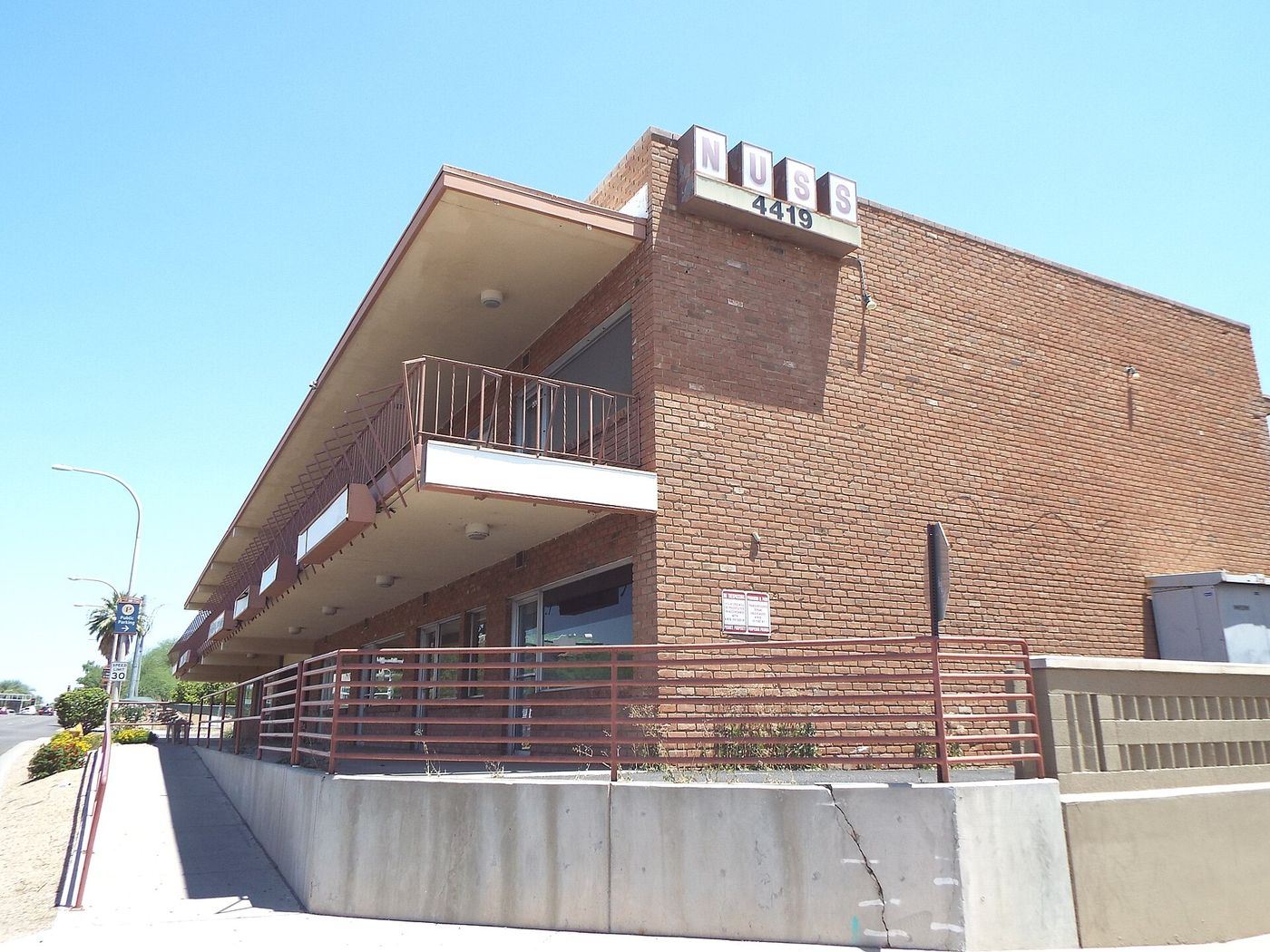
The Boom Decade
From 10,000 people to nearly 68,000 in ten years — while the town stops new billboards, asks its residents to plan it, builds an adobe-soft Civic Center, and annexes everything Phoenix can't grab first.
Read the chapter →
The Greenbelt Gamble
The Army Corps wanted a concrete ditch through the middle of town. Scottsdale wanted parks. The parks won — and changed how America does flood control.
Read the chapter →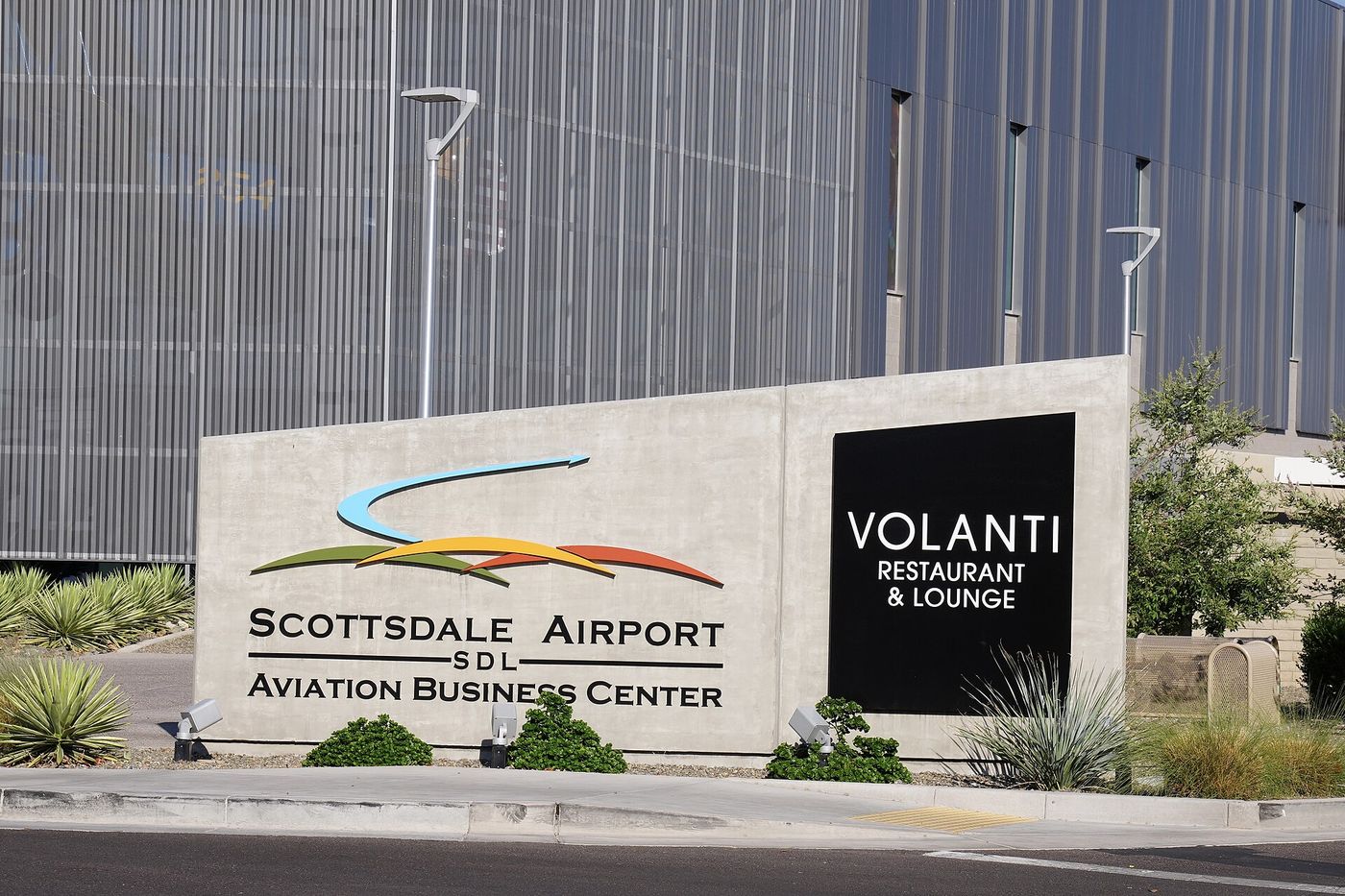
Resorts & the Push North
A dog-loving liquor-store owner becomes a mayor nobody can beat at the polls, and the city he runs doubles down on everything: resorts, golf, medicine, horses, and nearly a hundred square miles of new desert.
Read the chapter →
Buying the Mountains
Faced with rooftops climbing the McDowells, Scottsdale's citizens did something almost un-American: they voted to tax themselves to buy the view — permanently.
Read the chapter →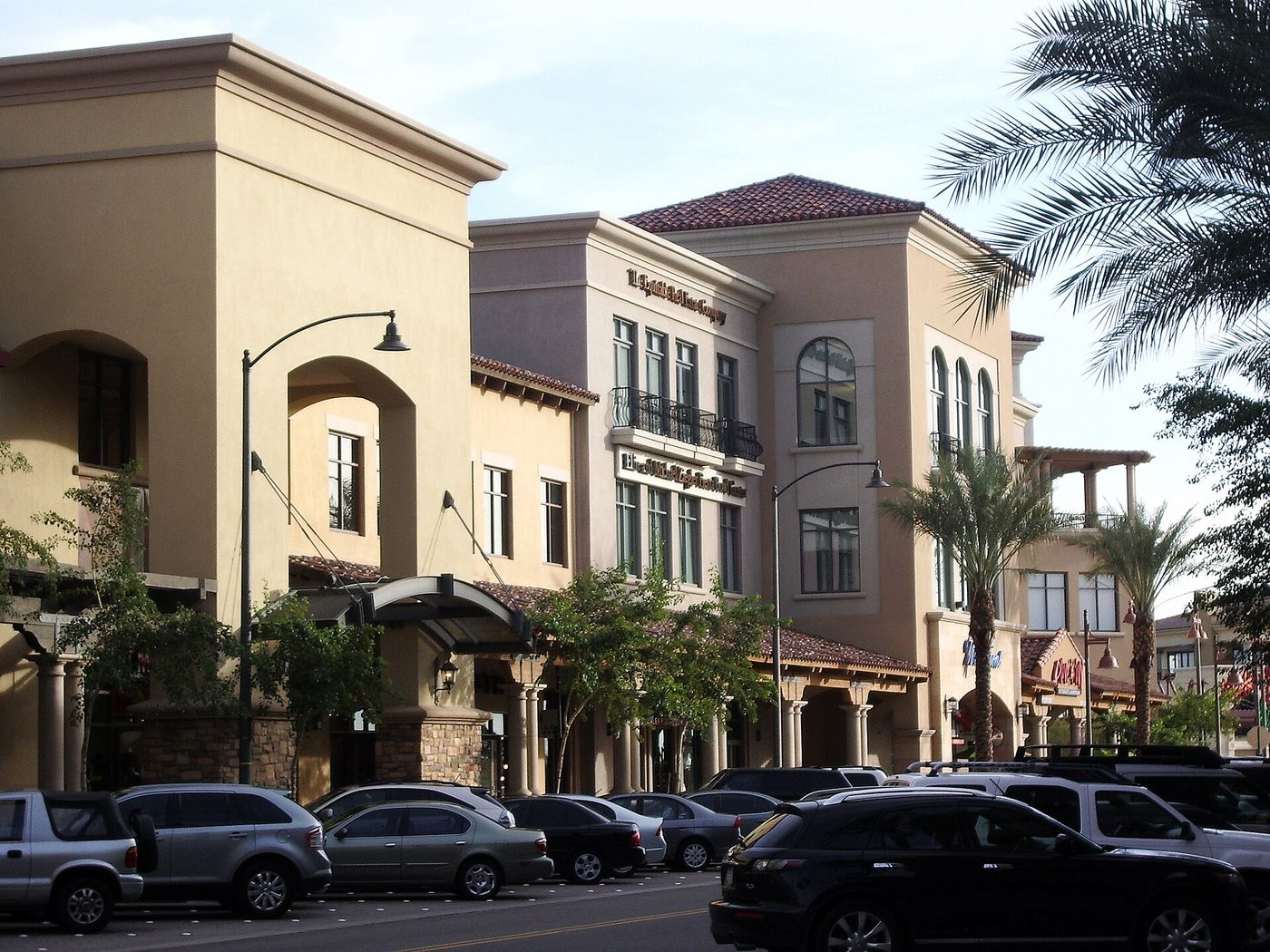
Condos, Canals & the Crash
The decade Scottsdale went vertical — canal-front condo towers, a resurrected Valley Ho, a nightlife district with velvet ropes — until 2008 turned off the music.
Read the chapter →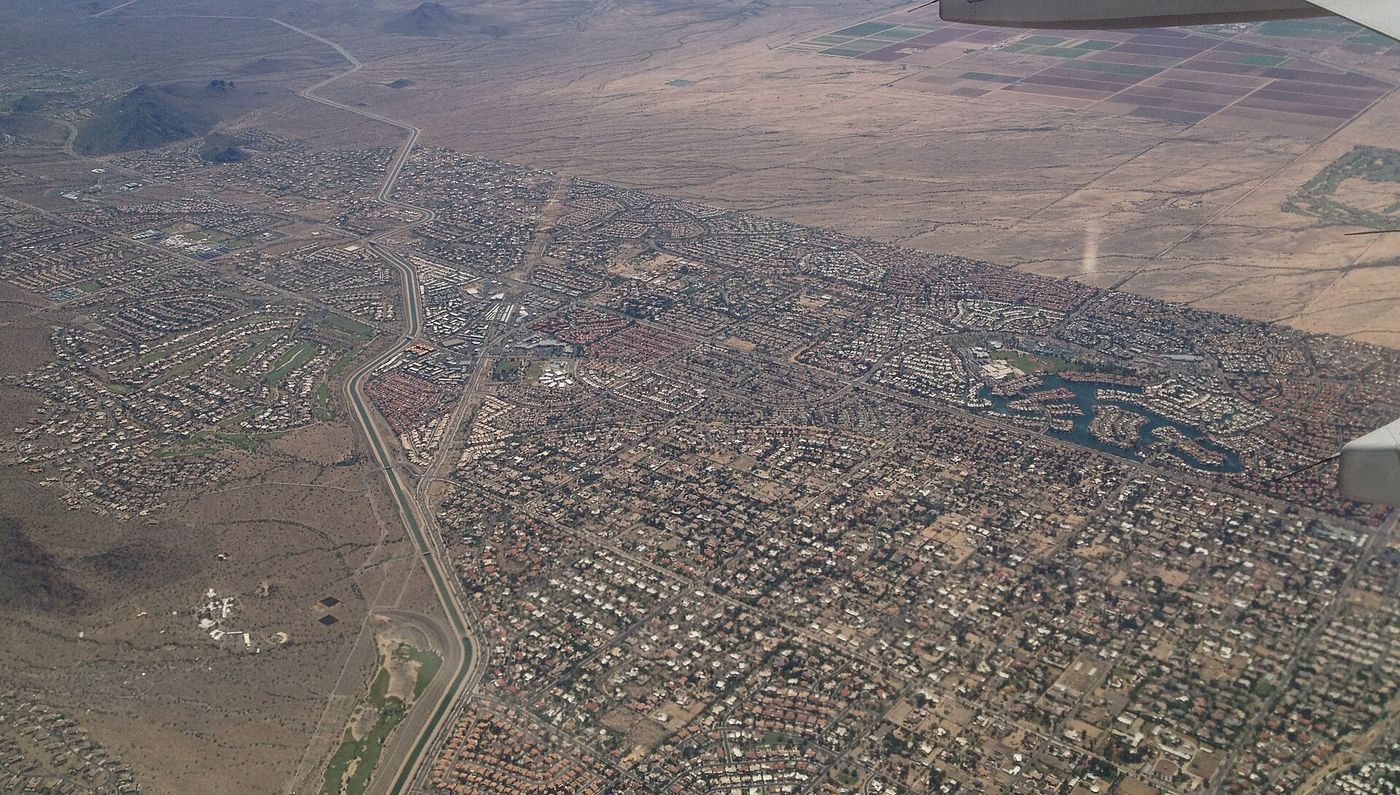
Recovery & the New West
The recovery decade: a Soleri bridge, a western museum, a tech-filled Airpark — and one more landslide vote proving the mountains are still sacred.
Read the chapter →
Growth on Trial
A pandemic, a water cutoff that made global headlines, a referendum war over a billion-dollar headquarters — the decade Scottsdale argues, out loud, about its own future.
Read the chapter →The people who made it
The founders, merchants, architects, artists and mayors behind the chapters above — 103 profiles in all.
- 1837–1910
Winfield Scott
Founder of Scottsdale — Buying the 640 acres that became Scottsdale and recruiting the families who settled it
- Active 1909–1940s
George Cavalliere
Pioneer Blacksmith — Founding Cavalliere's Blacksmith Shop in 1910, Scottsdale's oldest continuously operating business
- 1866–1954
Jessie Benton Evans
Landscape Painter — Painting the desert from her Camelback estate, drawing Scottsdale's first artist colony and giving the land for the Jokake Inn
- Active 1936–1967
Jack Stewart
Founder of Camelback Inn — Opening the Camelback Inn on empty desert in December 1936
- 1867–1959
Frank Lloyd Wright
Architect of Taliesin West — Building Taliesin West below the McDowell Mountains
- 1916–2002
Lloyd Kiva New
Cherokee Fashion Designer — Building the Kiva Craft Center on Fifth Avenue and taking Native design national
- 1919–2013
Paolo Soleri
Architect and Bell Maker — Cosanti, the earth-cast studio where his windbells are still poured, and the Soleri Bridge
- 1924–2004
Bennie Gonzales
Architect of the Civic Center — Designing Scottsdale City Hall, the Civic Center Library and the Center for the Arts
- 1936–1997
Herb Drinkwater
Mayor of Scottsdale, 1980–1996 — Sixteen years as the handshake mayor who presided over the resort boom and the push north
- Active 1990s–2010s
Jane Rau
Preserve Co-Founder — Co-founding the McDowell Sonoran Land Trust, the volunteer group behind the McDowell Sonoran Preserve
Landmark days
The single dates that changed the city's course — each with its own page.
- July 2, 1888
Winfield Scott Puts 50 Cents an Acre Down
Three hundred twenty dollars down on a square mile of creosote, the single transaction every other page in this archive descends from.
- February 19, 1891
The Great Flood Takes the Arizona Dam
The biggest flood the Salt River ever recorded tears out the wooden dam that fed the Arizona Canal — and a three-year-old farm colony learns how thin its lifeline is.
- July 13, 1896
School District No. 48 Is Born
Before a store, a post office or a town, the settlement gets a school district — seventeen children, one adobe room, and a name spelled 'Scotts-Dale.'
- June 17, 1902
Roosevelt Signs the Reclamation Act
Two thousand miles from the dry canals, a president signs the law that will pay for the dam — the single most consequential thing that happened to Scottsdale in its first twenty years.
- February 9, 1903
The Valley's Farmers Mortgage Their Land for a Dam
The paperwork behind the bravest bet in Valley history: drought-stricken farmers put up their own acreage to guarantee a dam none of them would live to see paid off.
- September 15, 1903
The Fort McDowell Reservation Is Created
Twenty-eight years after the Exodus, the Yavapai get the old fort on the Verde as a reservation — the nation over the McDowells from Scottsdale, and the future battleground over Orme Dam.
- June 25, 1904
Washington Signs On to Build the Dam
The federal government commits in writing: a storage dam at the mouth of Tonto Creek, financed by Washington and repaid by the Valley's farmers at about fifteen dollars an acre.
- September 20, 1906
The First Stone of Roosevelt Dam
Eighty miles upstream, in a canyon the Valley's farmers had mortgaged their land to build in, the first six-ton block goes down — the day the dam stopped being a promise.
- February 26, 1910
The Little Red Schoolhouse Is Dedicated
Thirteen or fourteen voters, a $5,000 bond, a brick school with two rooms — dedicated on the founder's birthday, eight months before he died.
- October 19, 1910
The Death of Winfield Scott
Scottsdale's founder dies at 73 — a wounded Union chaplain who bet $2.50 an acre on the desert and lived just long enough to see the bet assured.
- March 18, 1911
Roosevelt Dedicates the Dam
The former president dedicates the world's tallest masonry dam, ending the water gamble that had nearly killed the settlement.
- February 14, 1912
Arizona Becomes the 48th State
Statehood on Valentine's Day: Arizona completes the continental map while Scottsdale is still a dirt-street farm village of a few hundred.
- January 1, 1915
Arizona Goes Dry, and a Settlement That Meant to Be Dry Gets Its Law
Saloonkeepers across Arizona herd out quiet crowds and lock their doors, and the farm settlement that had wanted to be dry since 1897 gets a law it could never have passed itself.
- April 15, 1915
Roosevelt Lake Fills for the First Time
Four years after Roosevelt himself dedicated the dam, the lake behind it finally reaches the spillways — and the Valley learns what a full reservoir feels like.
- April 6, 1917
America Goes to War, and Cotton Goes Strategic
A declaration of war in Washington turns a desert farm village into a cotton boomtown — and brings the Mexican and Mexican-American families who would build the town for the next century.
- November 11, 1918
The Armistice Starts the Cotton Clock
Peace in Europe is the beginning of the end for the boom that nearly quadrupled the town — though it takes two more years of rising prices before anyone in Scottsdale believes it.
- January 17, 1921
The Farmers' State Bank Opens Its Doors
With cotton in free fall, a farm town of a thousand opens its first bank, and twelve years later loses it.
- January 4, 1922
Scottsdale Gets a Judge and a Constable
Thirty years before Scottsdale had a council, the county gives it a court: the Vice President's father-in-law on the bench and a rodeo roper as constable.
- April 1, 1922
132 Voters and a $73,000 High School
The third trip to the polls in seven weeks: a farm district that sent its teenagers away for school votes itself a high school.
- March 2, 1933
The Bank Holiday Closes Scottsdale's Only Bank
A governor's three-day holiday becomes permanent for one small-town bank, and Scottsdale banks in Phoenix for the next nineteen years.
- October 15, 1933
First Mass at the Old Adobe Mission
In the Depression's worst year, the families of the south side raise a church out of the ground with their own hands — 14,000 bricks, fifty pounds each — and say the first Mass on an October Sunday.
- December 15, 1936
The Camelback Inn Opens
In the middle of the Depression, a sportswriter and an industrialist open a pueblo-style inn on empty desert north of town — and invent the Scottsdale resort.
- January 20, 1937
Four Inches of Snow on the Saguaros
The desert turns white: one of the heaviest snowfalls in Valley history blankets the guest ranches and citrus groves.
- December 1, 1937
Frank Lloyd Wright Buys the Desert for Taliesin West
The most famous architect in America buys a mesa of creosote and rock at the edge of nowhere, and Scottsdale acquires the building that will define its reputation for the rest of the century.
- December 7, 1941
Pearl Harbor Reaches the Farm Town
A Sunday-afternoon radio bulletin in a town of two thousand — and within six months an airfield to the north, a POW camp to the south, and Stearmans circling the cotton fields.
- June 22, 1942
Thunderbird Field II Opens
Ninety days from alfalfa to airfield: the Army's newest primary flight school opens on the land that will become Scottsdale Airport.
- December 23, 1944
The Great Papago Escape
Twenty-five German prisoners, led by U-boat ace Jürgen Wattenberg, crawl through a 178-foot tunnel into the desert night — and into Arizona legend.
- January 28, 1945
The Last Escapee Is Recaptured
Thirty-six days after the tunnel, the escape's ringleader walks into Phoenix for food and is recognized — the Great Papago Escape is over.
- August 14, 1945
The War Ends
The radio brings the surrender to a town whose whole future — the airfield, the veterans, the boom — was about to come home.
- February 2, 1948
A Reporter Watches a House Burn and Founds Rural/Metro
No town, no fire department, a neighbor's house in flames — and a 22-year-old reporter with one used truck and a clipboard of subscriptions.
- June 25, 1951
Incorporation Day
Sixty-three years after the land filing, Scottsdale finally becomes a town: about half a square mile, a couple of thousand people, and a booster for a mayor.
- November 7, 1953
The First Parada del Sol
The Jaycees rename the Sunshine Festival, saddle up, and invent the town's defining ritual — one of the largest horse-drawn parades in the world, still running seventy-plus years later.
- March 10, 1956
Big-League Baseball Comes to Scottsdale
A town of a few thousand gets a big-league address: the Orioles christen the new Scottsdale Stadium and start a spring tradition that never really stopped.
- December 20, 1956
The Hotel Valley Ho Opens
Glass, concrete, and desert light: the Valley Ho opens downtown and the gossip columns start doing Scottsdale's advertising for free.
- December 28, 1957
Natalie Wood Marries Robert Wagner in Scottsdale
Hollywood's golden couple picks the little western town for their wedding — and Scottsdale's celebrity era gets its defining photograph.
- December 24, 1958
The Sugar Bowl Opens
A man overhears saloon patrons complaining there is nowhere to take the kids, paints a building pink, and opens on Christmas Eve.
- February 23, 1960
Scottsdale's First Charter (and Why It Didn't Count)
The town votes itself a charter, elects its first mayor directly, and acts like a city for a year and a half. Then the courts throw the charter out over a three-day calendar slip.
- October 9, 1961
Scottsdale Fashion Square Opens Its Doors
An open-air shopping court opens at Scottsdale and Camelback — nobody suspects it will grow into the luxury retail capital of the Southwest.
- October 31, 1961
Scottsdale Adopts the Charter It Still Uses
Halloween, 1961: the ten-year-old town votes on a charter for the second time in two years, and this one holds.
- January 30, 1964
Scottsdale and Phoenix Call a Truce on the Map
Two cities racing to swallow the same desert agree on a line: Scottsdale Road, from Cactus to Jomax. Sixty years later it still holds.
- June 16, 1967
Scottsdale Municipal Airport Opens on the Old Thunderbird Field
A war-surplus training field, a church's surplus land, and a city that wanted a runway: the day the Airpark began.
- November 7, 1967
Scottsdale Rewrites Its Charter
Six years after adopting its charter, the boomtown rewrites it: longer terms, a staggered council, and the legal power to keep Indian Bend Wash open and plan the city.
- October 11, 1968
City Hall and the Civic Center Are Dedicated
A boomtown of 60,000 gets a civic heart designed to look like nothing else in Arizona — and dedicates it with mariachis instead of speeches.
- November 21, 1969
Los Arcos Mall Opens
South Scottsdale gets its own enclosed downtown, with Mexican murals, fireworks and a Sears the size of a city block — and thirty years later loses it.
- September 5, 1970
The Labor Day Flood
The Arizona Canal breaks near Pima Road, the wash floods through subdivisions built across it, and the city's argument over how to tame it turns from whether to how.
- June 22, 1972
The Flood That Sold the Greenbelt
Nearly four inches of rain in eighty minutes, seventeen houses gone, and a city finally convinced that the wash needed to be a park.
- April 10, 1973
Voters Give Scottsdale Its Growth Tools
Nearly nine in ten voters hand the city the powers that shaped its next twenty years: developer fees, design review, specific plans and the order to take down old signs.
- October 23, 1975
The Center for the Arts Opens
A cowboy-town city council opens a purpose-built performing-arts hall on the lawn beside City Hall — and the West's Most Western Town becomes a town with a stage.
- June 12, 1980
Arizona Signs the Groundwater Management Act
A governor, an Interior secretary and a threat: the day Arizona stopped treating groundwater as free — and Scottsdale's water future changed course.
- November 12, 1981
Orme Dam Is Dead
A 600-person tribe beats the Bureau of Reclamation: the dam that would have drowned the Verde below Fort McDowell is cancelled, and the river Scottsdale's northeast looks out on stays a river.
- August 1, 1984
Scottsdale Doubles Its Map
Four years of annexations carry Scottsdale from about 89 square miles to about 182, most of it empty desert the city would spend the next forty years deciding what to do with.
- January 22, 1987
The Phoenix Open Tees Off at TPC Scottsdale
The Thunderbirds move their tournament from a Phoenix country club to a stadium course in the empty desert — and Scottsdale acquires the event that now draws 700,000 people a week.
- June 29, 1987
The Mayo Clinic Opens in Scottsdale
The most famous name in American medicine opens its third campus — and its second outside Minnesota — and chooses Scottsdale to do it.
- February 16, 1988
Scottsdale Votes Itself Term Limits
Fifteen questions from a citizen commission: term limits that never touched the mayor who proposed the ballot, an auditor the commission opposed, and a property rule it wanted gone.
- October 1, 1988
The Phoenician Opens
A savings-and-loan tycoon opens the most expensive resort in Arizona history on the ruins of two old inns — a year before the government seizes it.
- March 12, 1992
The New Scottsdale Stadium Opens
Thirty-six years after the Orioles played on a wooden grandstand, Old Town gets a real ballpark — designed by the Camden Yards architects and built in eleven months.
- May 12, 1992
The Fort McDowell Standoff
Eight moving vans, 349 slot machines, a road blocked with gravel trucks, and a governor arriving by helicopter: the day Arizona's tribal casinos were born.
- October 3, 1994
The McDowell Sonoran Preserve Is Established
With one resolution, the city commits to buying its own mountains — the paper birth certificate of America's largest urban preserve.
- May 23, 1995
Voters Fund the Preserve
A tax-averse boomtown votes to tax itself for thirty years — to buy a mountain range at retail.
- February 20, 1996
Voters Overturn the Council on Pima Road
A referendum reverses the council for the first time on the city's record, the charter finally drops its property rule, and the race to succeed Drinkwater goes to a second round.
- December 28, 1997
Herb Drinkwater Dies
'Mr. Scottsdale' dies at 61 — the handshake mayor who ran a boomtown like a small town, mourned by the city he greeted one person at a time.
- March 10, 1998
Scottsdale Votes on Who May Carry a Petition
After paid out-of-state circulators sank a referendum in court, the council limited petitions to residents, the activists referred the limit to the voters, and the voters kept it.
- February 14, 1999
SMoCA Opens
A cowboy-branded city opens a museum of contemporary art in a converted five-screen cinema, and the arts campus Bennie Gonzales sketched in 1966 gets its last major building.
- September 7, 1999
Yes to the Mountains, No to the Canals
One ballot, two answers: better than three to one for buying desert, and a narrow no to a downtown Venice on the Arizona Canal.
- April 7, 2002
The Last Link of Loop 101 Opens
Sixteen years, seventeen segments and a 1990 deal with the Salt River community later, the last two miles of freeway open in Scottsdale — and the city finally has a spine.
- April 20, 2002
Pinnacle Peak Park Reopens the Mountain
Seven years after development closed the peak to hikers, the city cuts a ribbon on a trail that guarantees public access in perpetuity.
- March 9, 2004
Scottsdale Says No to Los Arcos, and to Districts
The most lopsided city vote of the decade kills a 40-year subsidy for big-box stores, and voters keep electing the whole council at large.
- May 18, 2004
Voters Double Down on the Preserve
Nine years after taxing themselves to buy the mountains, Scottsdale's voters vote to tax themselves again — to buy the rest before the market does.
- July 1, 2005
Scottsdale Fire Department Takes Over
Fifty-seven years after Lou Witzeman started a subscription fire brigade, firefighters at every Scottsdale station change shirts at midnight — and the city runs its own department for the first time.
- December 1, 2005
The Hotel Valley Ho Reopens
The hotel that Ramada nearly loved to death comes back exactly as Varney drew it — and Scottsdale discovers that its midcentury past is worth more than the lot it sits on.
- January 22, 2006
Speed Cameras Switch On Along the Pima Freeway
Scottsdale puts speed cameras on a state freeway, the first such program in the country; crashes fall, and the argument over who it was really for begins.
- March 27, 2008
SkySong Opens on the Bones of Los Arcos
Eight years after the mall came down, a university plants a tech campus on the corner — and opens it at the worst possible moment, and it works anyway.
- November 4, 2008
The 590-Vote Mayor
A state law moves the city's election onto the presidential ballot, turnout quadruples, and the mayor loses by 590 votes.
- December 11, 2010
The Soleri Bridge Is Dedicated
At 91, Paolo Soleri finally gets a bridge built — a solar instrument spanning the canal that started the whole city.
- February 26, 2011
First Pitch at Salt River Fields
Five Stearman biplanes fly over, a choir from the community's schools sings, and two big-league teams open the first spring-training ballpark on tribal land — with a Scottsdale address that isn't in Scottsdale.
- March 13, 2012
Scottsdale Votes Down Its General Plan
On a low-turnout spring ballot, a slow-growth coalition beats the city's new General Plan by 1,064 votes.
- January 15, 2015
The Museum of the West Opens
Four decades after the gallery district began, Old Town gets its institution — a serious museum of the American West, two blocks from the hitching posts.
- September 3, 2016
OdySea Aquarium Opens
Two million gallons of ocean open in the desert — on Salt River Pima-Maricopa land, welded into Scottsdale's visitor economy.
- November 6, 2018
Prop 420 Locks the Preserve
Seventy-one percent of voters write the Preserve's protection into the charter: its land stays as it is unless the people vote otherwise.
- November 5, 2019
After a Decade of No, a $319 Million Yes
With every council member signed on, voters approve the first big bond package for city projects since 2000.
- March 12, 2020
Spring Training Stops Mid-Season
The Cactus League goes silent mid-game week — the visible first domino of Scottsdale's pandemic year.
- April 7, 2020
The Council Repeals Southbridge Two
Four council members undo their own vote so Old Town's height fight never reaches the ballot.
- January 1, 2023
The Rio Verde Water Cutoff
New Year's Day: the standpipe closes to non-residents, 500-plus homes lose their hauled water, and Scottsdale becomes the world's shorthand for the Colorado River reckoning.
- November 5, 2024
Borowsky Unseats Ortega
The growth argument picks a winner: a slow-growth challenger takes the mayor's office with 54%, as the Axon fight rages in the background.
- April 18, 2025
The Governor Signs the Axon Bill
A city referendum, a company threatening to leave the state, and a Legislature that takes the decision away: the day the Axon fight went over Scottsdale's head.
Every year since the claim
A page for each year from 1888 to today. marks years with recorded milestones; the rest hold the period's context while research continues.