
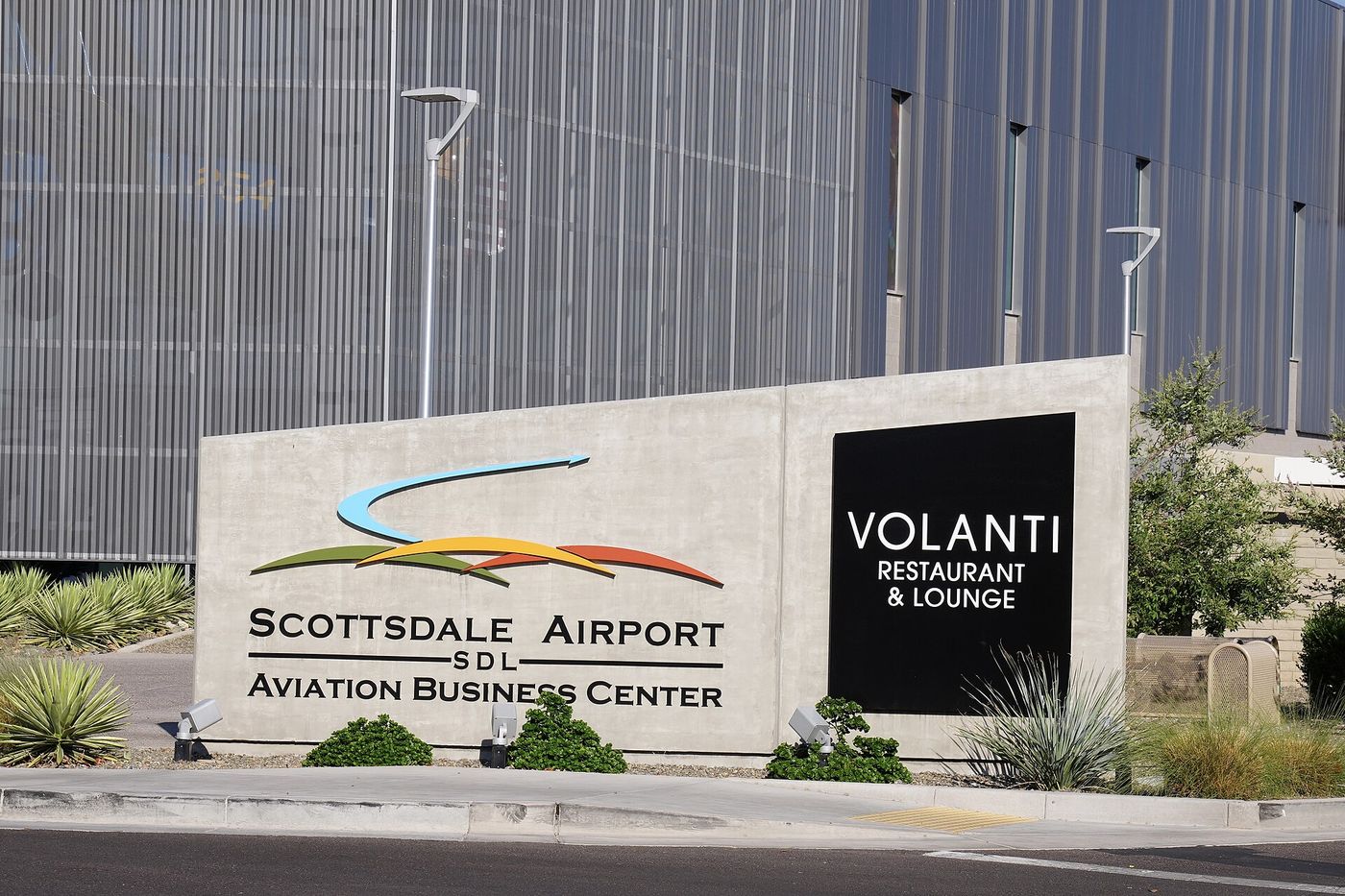
At a glance: The 1980s belong to Herb Drinkwater — the handshake mayor who ran the city like a small town while it stopped being one. Scottsdale annexed its way to about 182 square miles, opened two flagship resorts in consecutive years, landed the Mayo Clinic’s third campus, plugged into Colorado River water, and built the golf tournament that out-draws every other on earth. The bill for all that desert would come due in the 1990s.
The Drinkwater style
Elected in 1980, liquor-store owner Herb Drinkwater governed by remembering names — his own brand of retail politics, dog usually at heel, that voters rewarded for sixteen years. Style aside, his administrations were shrewd: Drinkwater’s Scottsdale courted exactly the growth that fit the brand (resorts, medicine, horses, golf, corporate aviation) and annexed the raw desert that would let the city control its own northern destiny. Between 1981 and 1984 the city swept in vast tracts toward Pinnacle Peak, roughly doubling from about 89 to about 182 square miles by the city’s own chart, approving master-planned Gainey Ranch and Scottsdale Ranch, and luxury desert golf communities like Desert Highlands — the leading edge of development climbing into the McDowell foothills.
1986–87: the years of the mega-resort
Scottsdale’s hospitality economy changed weight class in two years. The Hyatt Regency at Gainey Ranch, with its water gardens and white architecture, opened in 1986, by a trade account (the Historical Society says 1985), and the Scottsdale Princess, a Mexican-colonial palace on 65 acres beside the new TPC golf ground, in 1987. These weren’t inns; they were self-contained villages with conference economies, and they cemented the resort corridor as the city’s public face. Occupancy math now drove city budgets. On November 8, 1988 voters raised the hotel bed tax from 2 to 3 percent, 30,337 to 13,786, with two-thirds earmarked for “hospitality development”; the money went to tourism marketing, WestWorld and eventually museums.
1987: the trifecta year
Three permanent pillars landed in one twelve-month span:
- The Mayo Clinic opened its Scottsdale campus — the fabled Minnesota institution’s second branch outside Minnesota (Jacksonville had opened in October 1986) — after years of civic courtship. It anchored a medical economy that now rivals tourism.
- Colorado River water arrived as the city’s CAP treatment plant came online, diversifying supply beyond SRP and wells. Few 1987 headlines aged better; when the Colorado’s 2020s shortages hit, Scottsdale’s early CAP-and-conservation strategy was the reason the city held steady.
- The Phoenix Open moved to TPC Scottsdale, a stadium course purpose-built for six-figure galleries beside the site of the Princess, on federal flood-control land for which Washington collected no rent, a deal a congressional audit questioned in 1991 (see the TPC land deal). The January tournament grew into golf’s biggest party — and its 16th hole into the loudest place in the sport.
Add WestWorld (opened in 1983 as Horseman’s Park, a replacement for a horse park the airport runway displaced), which would grow into the home of the Scottsdale Arabian Horse Show and the Barrett-Jackson collector-car auction, and the 1987-era city had assembled its full modern events calendar.
Not all of it lasted. The men’s tennis tour came in October 1986 and settled at the Princess, where McEnroe, Lendl and, four times, Agassi won it, until Tennis Channel took it to Las Vegas in 2006 (the tournament’s own page). East of town, Out of Africa opened its big-cat park on Fort McDowell Yavapai Nation land in 1988 and stayed sixteen years before moving to Camp Verde.
City Hall’s decade
The decade’s politics were quieter than its building, and more contested than the handshakes suggested. A 7 a.m. council meeting in June 1980 tried to annex a ring around 86 square miles before a new state law took effect; the courts threw it out. In 1985 the council required fire sprinklers in every new home over home builders’ warnings. In 1986 voters turned out all three council incumbents on the ballot; in 1988 they adopted term limits and raised the bed tax; in 1989 they approved $287 million in bonds and a stadium rebuild. The 1980s politics chapter tells it in full, and the TPC land deal follows the decade’s most questioned bargain.
Old Town learns new tricks
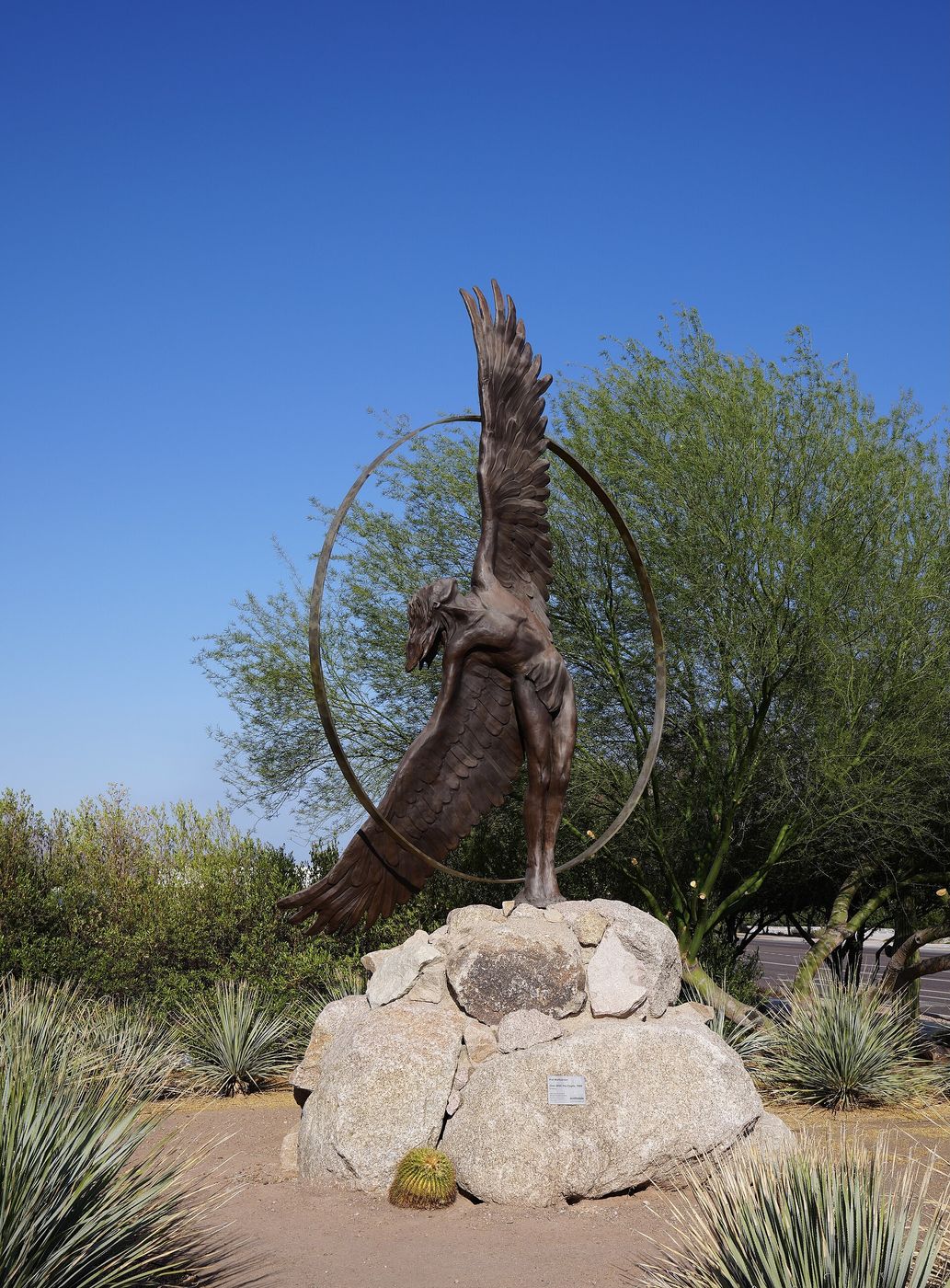
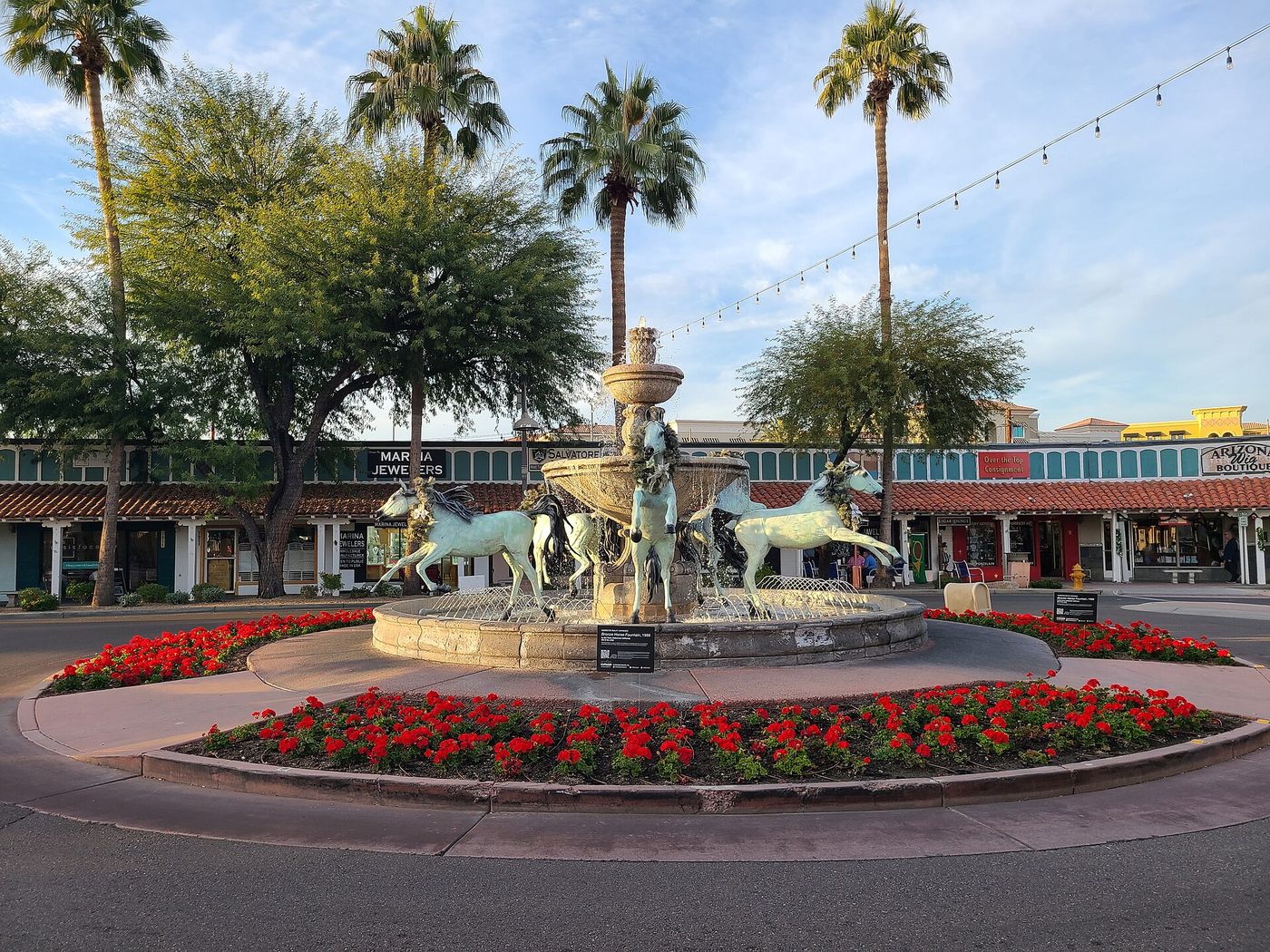
Downtown’s answer to mall-era retail was to lean all the way into art. The gallery count climbed through the decade, and the Thursday-night ArtWalk — begun in the mid-1970s and institutionalized in the 1980s — made Main Street and Marshall Way a weekly opening-night party. Western storefronts now sold Fritz Scholder and bronzes alongside bolo ties; the Museum of the West would eventually formalize what these blocks had become. Public art spread beyond downtown — the Bronze Horse Fountain (1989) at 5th Avenue, airport sculpture, and percent-for-art funding that made Scottsdale a national model.
The desert notices
By decade’s end the city sprawled across about 184 square miles and 130,069 people, with bulldozers working steadily up the McDowell bajadas. The same residents who had chosen grass over concrete in the 1970s began asking the obvious question: should the mountains themselves be next, or should Scottsdale draw a line? A small group founded what became the McDowell Sonoran Land Trust in 1991 — and the fight to buy the mountains is the story of the 1990s.