
At a glance: World War II put Scottsdale under a flight path. A pilot-training field rose on the alfalfa north of town in 1942, German prisoners tunneled out of a camp on the town’s doorstep in 1944, and when it all ended, the veterans came back — with families, GI loans, and no intention of shoveling snow again. Add a craft colony and a private fire brigade, and the fuse of the 1950s boom is lit.
1942: biplanes over the alfalfa
Weeks after Pearl Harbor, the Army’s flight-training program went looking for flat land with 300 flying days a year, and the Valley had it in surplus. Thunderbird Field II was thrown together in a matter of months on farmland at what is now Scottsdale Airport, joining a constellation of Valley fields (Thunderbird I in Glendale, Luke, Williams, Falcon). Operated by civilian contractors under Army supervision, the field ran primary flight training in Stearman PT-17 biplanes — the yellow-and-blue trainers every WWII pilot remembered fondly and feared slightly.
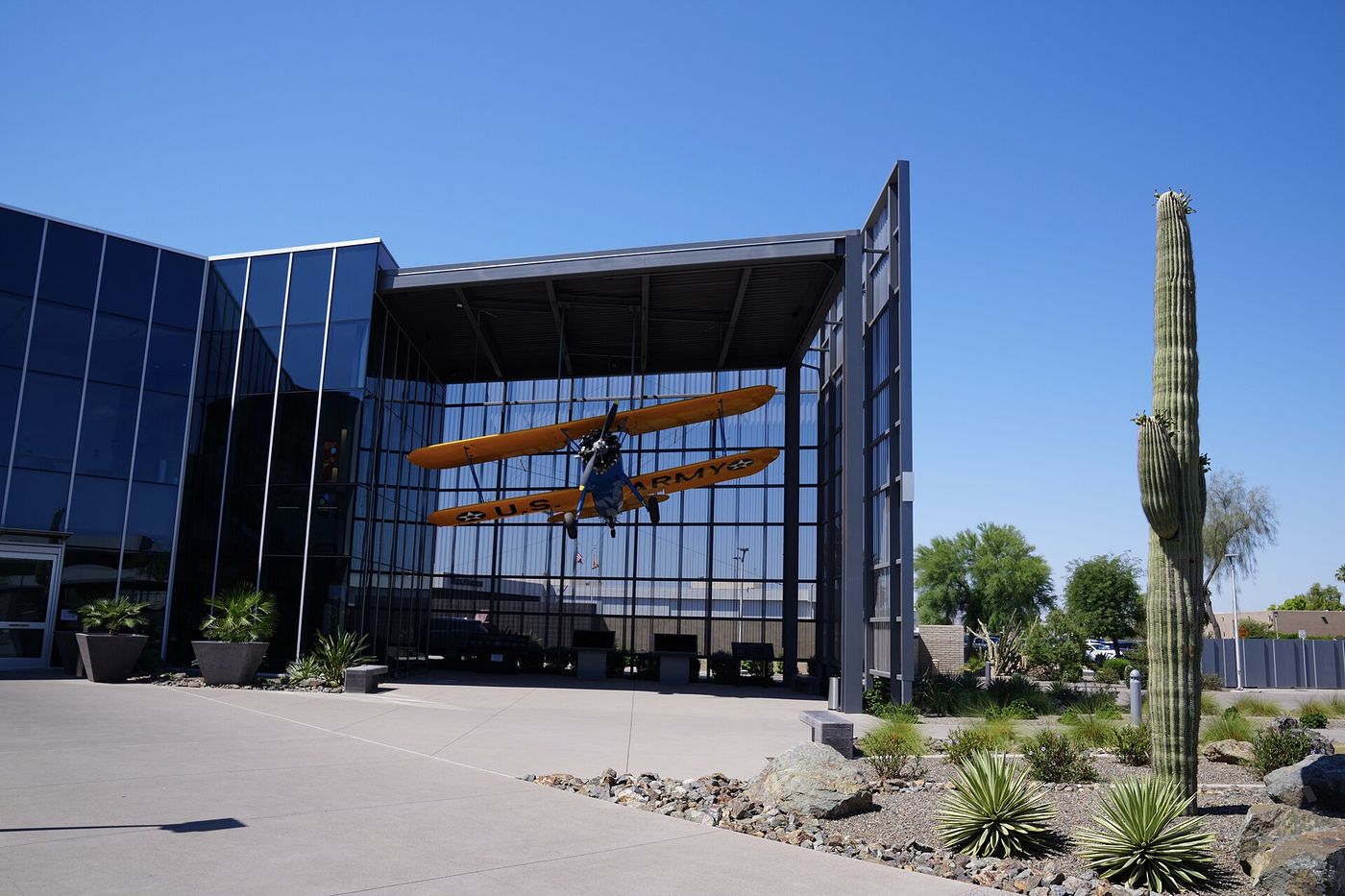
Thousands of cadets cycled through, mainly U.S. Army aviation cadets (the Chinese and British programs were at Thunderbird I in Glendale and Falcon Field in Mesa) — soloing over the same fields where the cotton boom had raged twenty years earlier. For a town of two thousand, the field meant jobs, boarders, dances, and a permanent aviation habit: the city bought the airfield in 1966 and opened Scottsdale Municipal Airport in 1967, and the Airpark around it is today one of Arizona’s largest employment centers — arguably the war’s longest-running local dividend.
December 23, 1944: the Great Papago Escape
On Scottsdale’s southwestern edge, Camp Papago Park held German POWs — mostly U-boat crews. On the night of December 23–24, 1944, twenty-five of them, led by U-boat ace Jürgen Wattenberg, slipped out through a 178-foot tunnel dug with coal shovels and hidden under a bathhouse. It remains the largest escape of Axis prisoners on U.S. soil.
The escape’s punchline is pure Arizona: several escapees planned to raft the Salt and Gila rivers to Mexico, having studied maps that showed a bold blue line — and found the riverbed bone-dry. Cold, hungry, and defeated by the desert more than by the manhunt, all twenty-five were recaptured within about a month; Wattenberg himself was caught in Phoenix in late January after weeks hiding in the hills. The story is retold every Christmas in Valley newspapers, and deserves to be.
1945–1950: the veterans vote with their feet
The war ended and the Valley kept the soldiers. Men who had trained at the desert fields came back with wives, children, and GI Bill financing; evaporative coolers and then refrigeration made summers survivable; and the citrus tracts south of town began sprouting subdivisions. Scottsdale’s own institutions scrambled to keep up with a town that was still, legally, nobody’s responsibility:
- Whitey’s (1941) and the movie theater — Malcolm White, a future first mayor, had already given the town a cafe, a bar, and a screen.
- The Chamber of Commerce incorporated (1947) and began marketing the town in earnest.
- Rural Fire Protection Company (1948). After watching a neighbor’s house burn with no one to call, Lou Witzeman founded a private subscription fire department, later Rural/Metro, — a Scottsdale peculiarity that lasted until the city finally stood up its own fire department in 2005.
- The Scottsdale Progress (1948) gave the boom a hometown paper of record.
1947: craftsmen move in
The decade’s quietest event mattered most. In 1947 the Arizona Craft Center opened — silversmiths, potters, weavers, and leather workers in a cooperative workshop-showroom — alongside the new Village Patio shops. When fire destroyed the Craft Center building in 1950, the artisans didn’t leave; they scattered into cheap storefronts around Fifth Avenue and Main Street, turning the town center into a browsable arts district.
That accident of arson-by-fate set Scottsdale’s postwar identity: a western town where tourists shopped for silver, paintings, and handmade furniture between resort stays. The Chamber already had a slogan cooking — “The West’s Most Western Town” — and in the 1950s the town would incorporate, brand itself, and grow five-fold.