
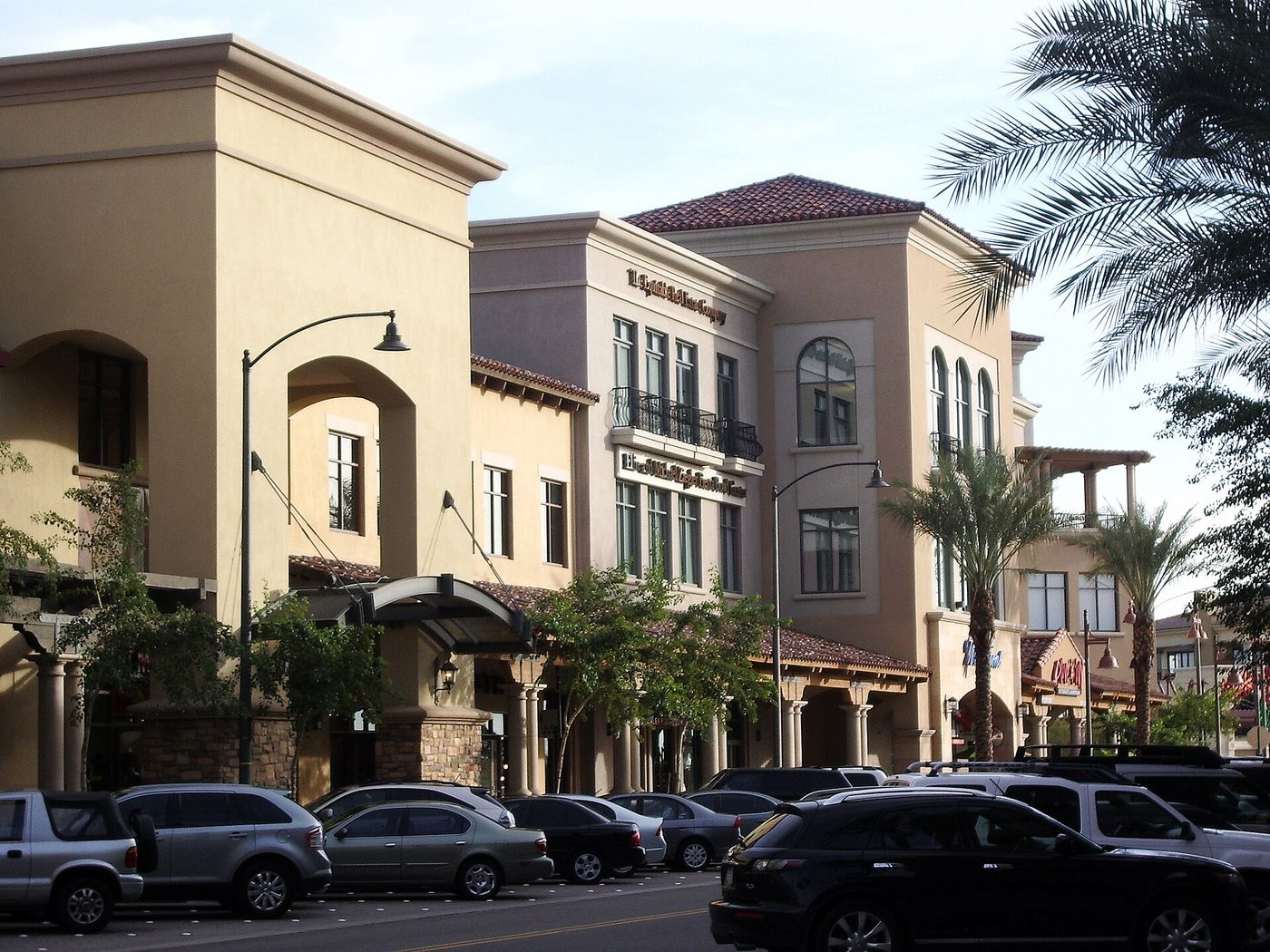
At a glance: The 2000s gave Scottsdale a skyline. Condo towers rose over the old canal, the Valley Ho came back from the dead, Old Town learned to charge cover, and the south side traded a dead mall for an ASU innovation campus. Then 2008 arrived and metro Phoenix became ground zero of the national crash — ending the decade with silent cranes and a hard lesson about building on leverage.
Loop 101 rewires the map
The Pima Freeway, open through most of Scottsdale by 2001 and finished with its last two miles in April 2002, ran the city’s eastern flank along the Salt River Pima-Maricopa Indian Community border (whose leaders had agreed to the alignment on their land’s edge — and whose casinos and Talking Stick developments would soon face it). Distance died overnight: the Airpark, north Scottsdale, and the resort corridor were suddenly minutes from anywhere in the metro. Jobs and rooftops followed the ramps; so did every retailer that had been waiting for the traffic counts.
The canal becomes an address
For 120 years the Arizona Canal had been pure plumbing — the ditch that made the town possible and was thereafter ignored. The 2000s’ cleverest move was noticing it. The Scottsdale Waterfront project (mid-2000s) lined the canal south of Fashion Square with shops, restaurants, and the city’s first real high-rise condominiums; suddenly Scottsdale had waterfront property in the Sonoran Desert, one of the great straight-faced marketing triumphs in Arizona real estate.
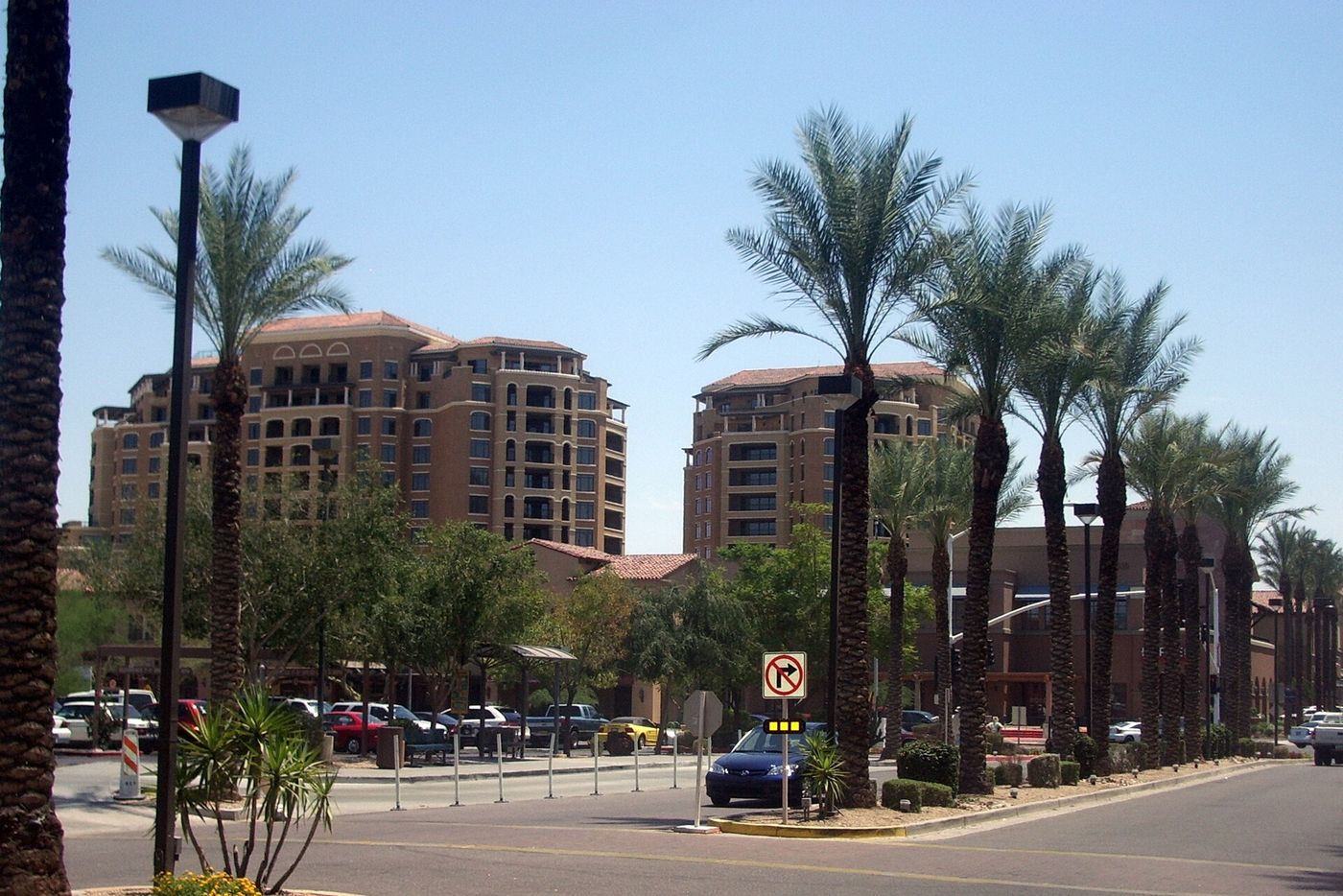
The district worked. Paolo Soleri’s pedestrian Soleri Bridge would cap it in 2010, and the canal banks now host Canal Convergence, the city’s signature public-art festival — a straight line, conceptually, from W.J. Murphy’s dig crews to light sculpture.
Rebirth on Main Street
Preservation had its best decade since the Little Red Schoolhouse:
- Hotel Valley Ho (2005). Bought back from blight and restored for roughly $80 million, the 1956 icon reopened with its Varney bones intact and a tower built from the original unbuilt plans. It instantly re-anchored downtown cool.
- The Old Adobe Mission got its structural restoration in the late 2000s, securing the 1933 parishioner-built church for another century.
Around them, Old Town’s blocks specialized: gallery rows by day, and by mid-decade a full-blown nightlife district by night — clubs, lounges, and rooftop bars that made Scottsdale the metro’s going-out capital and gave the city council a permanent agenda item. (For the daylight version of Old Town, start with our local spots guide.)
SkySong: the mall becomes a campus
South Scottsdale finally solved its Los Arcos problem. After the arena went to Glendale in 2001, the developer’s next plan, a subsidized Walmart center, lost at the polls 83 to 17 in March 2004 (see the Los Arcos referendum). That May the ASU Foundation bought the land and sold it to the city, which leased it back for an innovation campus; SkySong opened in 2008 under its landmark tensile canopy, filling with startups, ASU programs, and global firms. It was the right idea at the worst possible moment — which made its steady growth through the downturn all the more convincing, and it seeded the McDowell Road corridor’s long revival.
City Hall’s decade
The decade’s politics were settled at the ballot box. In May 2003 voters rejected two initiatives to replace the Rural/Metro contract with a city fire department, and the company gave notice anyway (see the fire-department initiatives). On March 9, 2004 they rejected the Los Arcos subsidy and a plan for council districts; in May they approved a second Preserve tax with 54.5 percent, the narrowest Preserve margin on record. On January 22, 2006 speed cameras switched on along the Loop 101, and on November 4, 2008, in the city’s first fall election, Jim Lane unseated Mary Manross by 590 votes. The 2000s politics chapter tells it in full.
2008: the music stops
Metro Phoenix had built one of America’s most leveraged housing economies, and Scottsdale rode it up — a 2005 special census claimed 226,395 residents — then down. The 2008 financial crisis froze the condo pipeline mid-pour, cut home values by roughly a third, and idled the construction and finance payrolls that had quietly become as important as tourism. The 2010 census counted 217,385 — the first decade in city history that ended below its mid-decade peak.
Two things kept working through the bust: the Preserve kept buying mountain (the Gateway Trailhead opened in 2009 to crowds), and the events machine — the Open, Barrett-Jackson, spring training in the stadium rebuilt in 1992 and renovated in 2006 — kept the visitor economy’s pilot light lit. The 2010s would relight everything else, and add a few fights about what kind of city the recovery should build.