
At a glance: The 1920s are Scottsdale’s great pivot. The cotton economy blew up exactly as feared, but instead of dying, the town of 1,047 grew a genuine Main Street — a department store, a bank, a newspaper, a high school — and stumbled onto its destiny when an artist’s adobe guest house started taking winter reservations. By 1930 the population had nearly tripled again.
The crash lands first
The wartime cotton bubble popped in 1920–21 with textbook cruelty. Pima cotton that had touched $1.35 a pound during the war would hardly sell at 40 cents by early 1921. Farmers who had ripped out orchards and dairy herds to plant fiber were left with debt, seed, and a market that had ceased to exist. Some lost everything; the Valley’s banks wobbled, and Scottsdale’s own Farmer’s State Bank — opened hopefully in 1921 — would not survive the Depression’s arrival, closing in 1933.
The land recovered faster than the balance sheets. Fields went back to alfalfa, grain, citrus, and dairy, and Scottsdale relearned the founding lesson: never bet the whole town on one crop. Remarkably, the crash barely dented the population curve — 1,047 people in 1920 became 2,761 by 1930 — because the town had started selling things more durable than cotton.
Main Street becomes real
Between 1920 and 1925 Scottsdale acquired the full toolkit of an actual town:
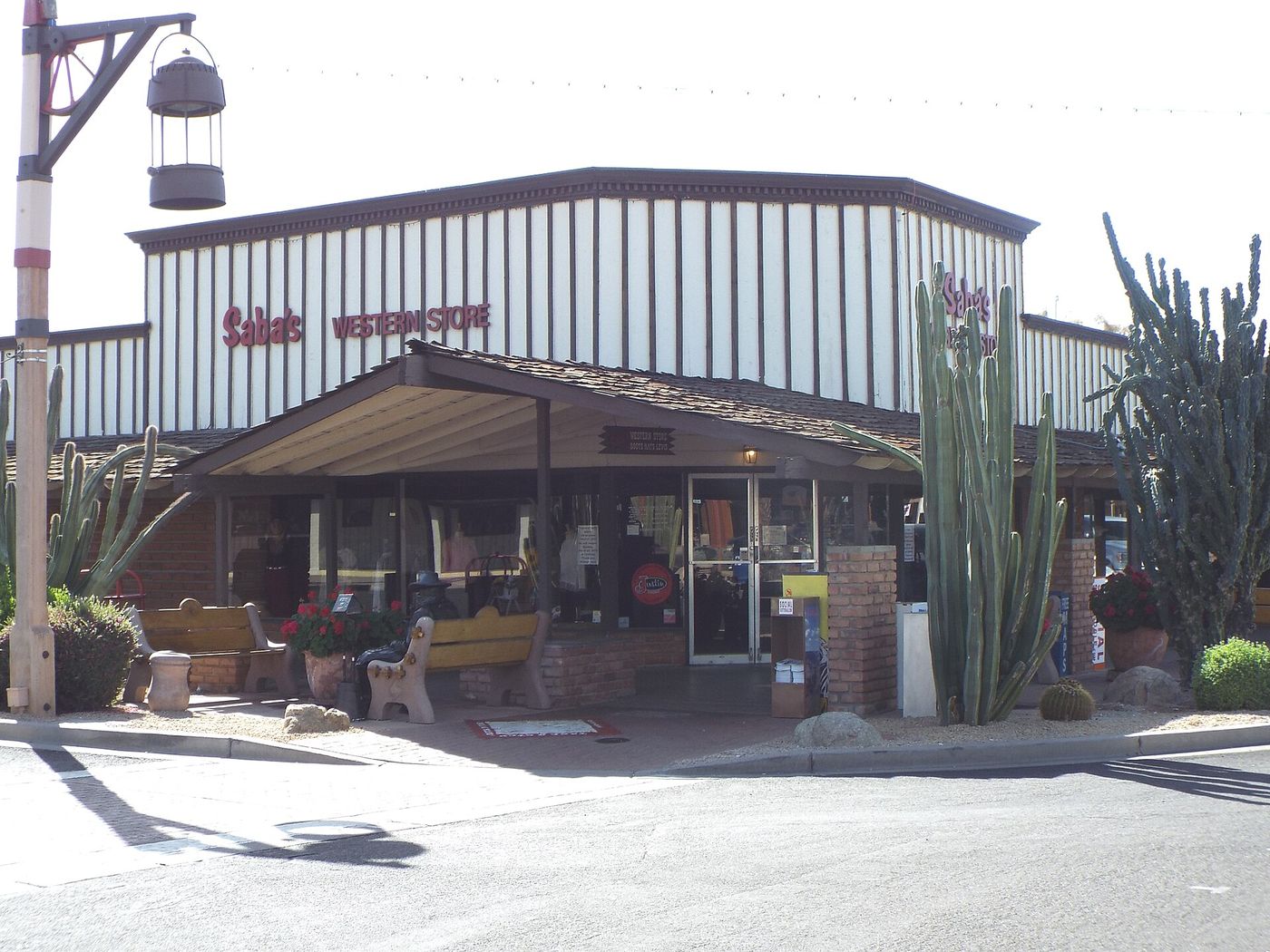
- Saba’s Department Store (1927). Syrian immigrant E.M. Saba opened the dry-goods store that would anchor Main Street retail for generations — Sabas were still selling western wear downtown into the 2000s.
- A bank (1921), a newspaper (1922). The Farmer’s State Bank and the Scottsdale Bulletin gave the town credit and a public record.
- A court (1922). The county gave Scottsdale its own justice of the peace and constable, the first local officers it ever had; the 1920s politics chapter tells how the farmers and boosters got them.
- Scottsdale High School (1922–23). Voted in three elections in 1922 and built on Indian School Road; the first graduating class was three students. By 1920 the district already ran six teachers and 410 pupils.
- Churches multiplied — the Methodists organized in 1924, by the Historical Society’s account, joining the Baptists — and the townsite’s merchant row now included Johnny Rose’s pool hall (1923) and Cavalliere’s blacksmith shop, a family business that survives on Brown Avenue as one of the oldest continuously operating shops in Arizona.
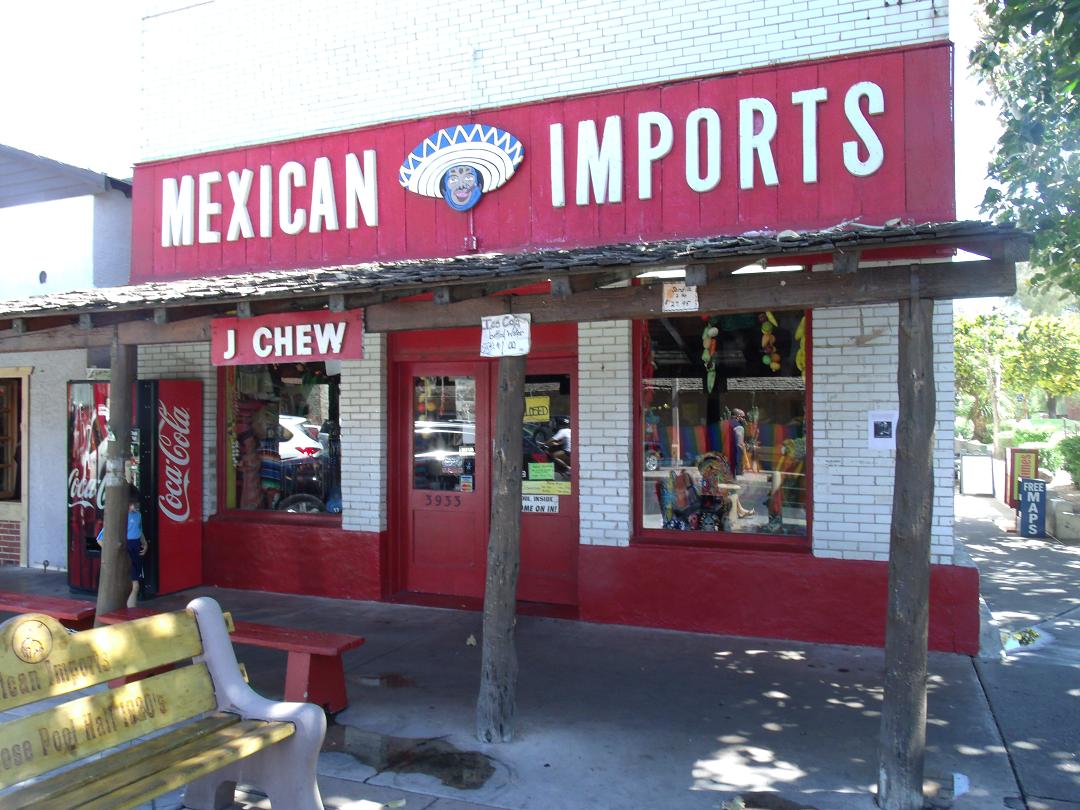
The merchant row was quietly diverse for a small Arizona town: alongside Anglo, Syrian, and Mexican-American businesses, Chinese-American merchants traded downtown — in 1929, J. Chew Song bought Johnny Rose’s store, continuing a small but established Chinese grocery presence.
Polo, painters, and paying guests
The decade’s real invention was the winter visitor economy. Three threads came together:
Society sport. In 1929 a group of riders in Phoenix incorporated the Westward Ho Riding Club — renamed the Valley Field Riding and Polo Club in 1932 — which later laid out grounds west of Scottsdale, importing the horsey rituals of eastern money to the alfalfa flats. Winter visitors could now ride, hunt, and play polo in January sunshine.
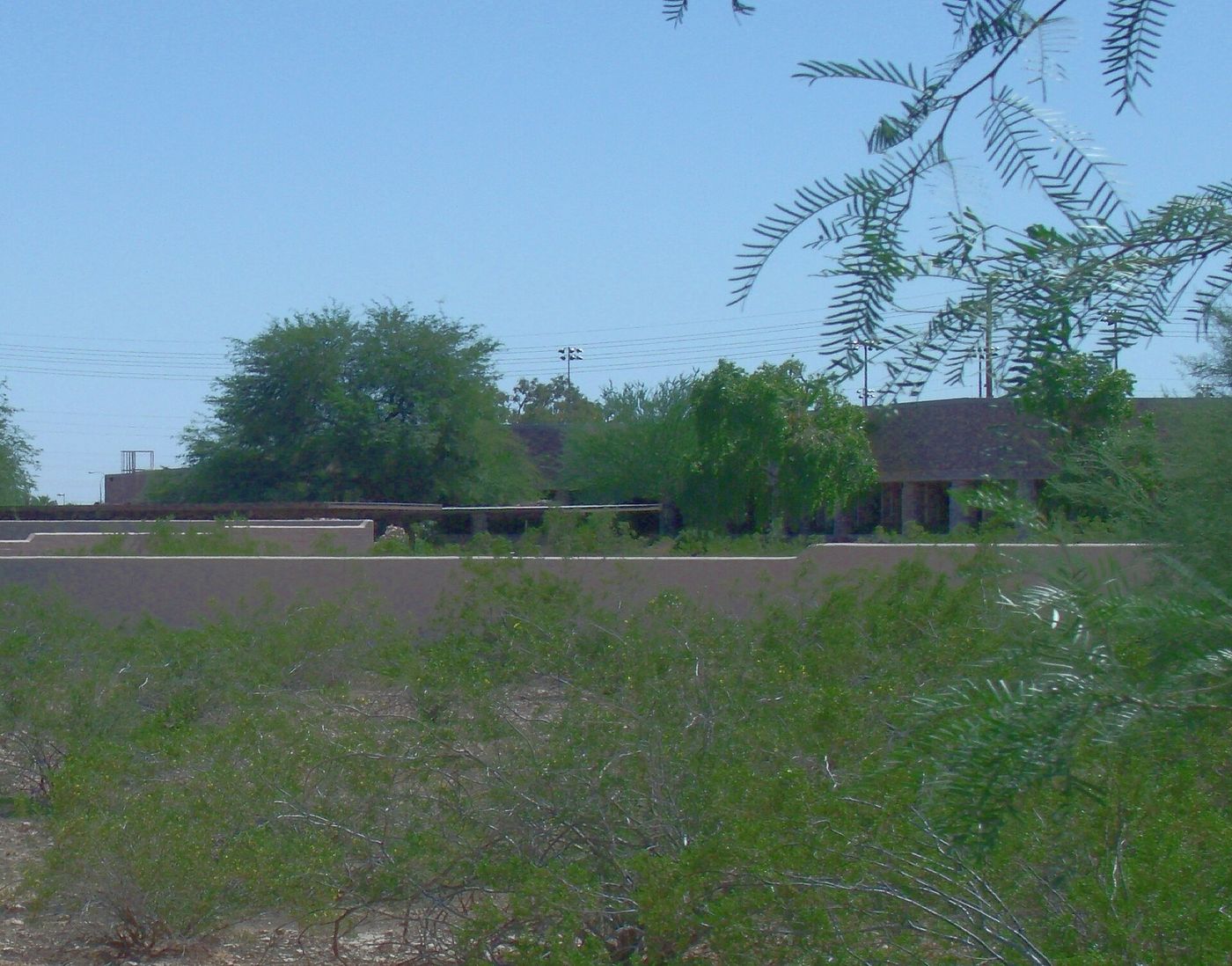
Artists. Italian-trained painter Jessie Benton Evans had settled at the foot of Camelback Mountain, and her circle of artist and architect friends began wintering nearby — the first cell of the arts colony that would define Scottsdale by the 1930s and beyond.
The Jokake Inn (1926). Evans’ son Robert, an architect, built an adobe house on twelve acres his mother gave him; his wife Sylvia and her friend Lucy Cuthbert opened it as a tearoom, and it was named Jokake — from a Hopi word for “mud house” — and its handful of rooms grew into the area’s signature resort. The formula (adobe romance + Camelback views + eastern guests who returned every winter) was the prototype for a century of Scottsdale hospitality.
The decade ends on a cliff
October 1929 put an asterisk on all of it. The town had rebuilt itself on merchants and winter guests, and both would be tested immediately — though, in one of Scottsdale history’s happy ironies, the Depression decade turned out to be a golden age for exactly the kind of tourism this town sold. That story, plus a hand-built adobe church and the arrival of Frank Lloyd Wright, belongs to the 1930s.