A runway looking for a purpose
Thunderbird Field II had trained more than 5,500 Army pilots in Stearman biplanes between June 1942 and October 1944, and then sat. Arizona State used it briefly; in 1953 the Seventh-day Adventists bought it for a school, Thunderbird Academy, and kept the runway. By the early 1960s the church had surplus land beside a serviceable airstrip in the path of a city annexing north at a sprint — Scottsdale had swept the field inside its limits in the 1962–63 annexations that Phoenix challenged and lost — and in 1963 it hired a Kansas City developer to sell.
The city’s citizen planners got there first. The STEP committees formed in 1964 recommended, in January 1965, that Scottsdale acquire the field and build a 5,000-foot runway. On July 12, 1966 the city took title to the 201 acres for $750,000 in federal funds — the Adventists later gave the money back as a gift to the city — and in September Mayor Bud Tims turned the first shovel.
June 16, 1967
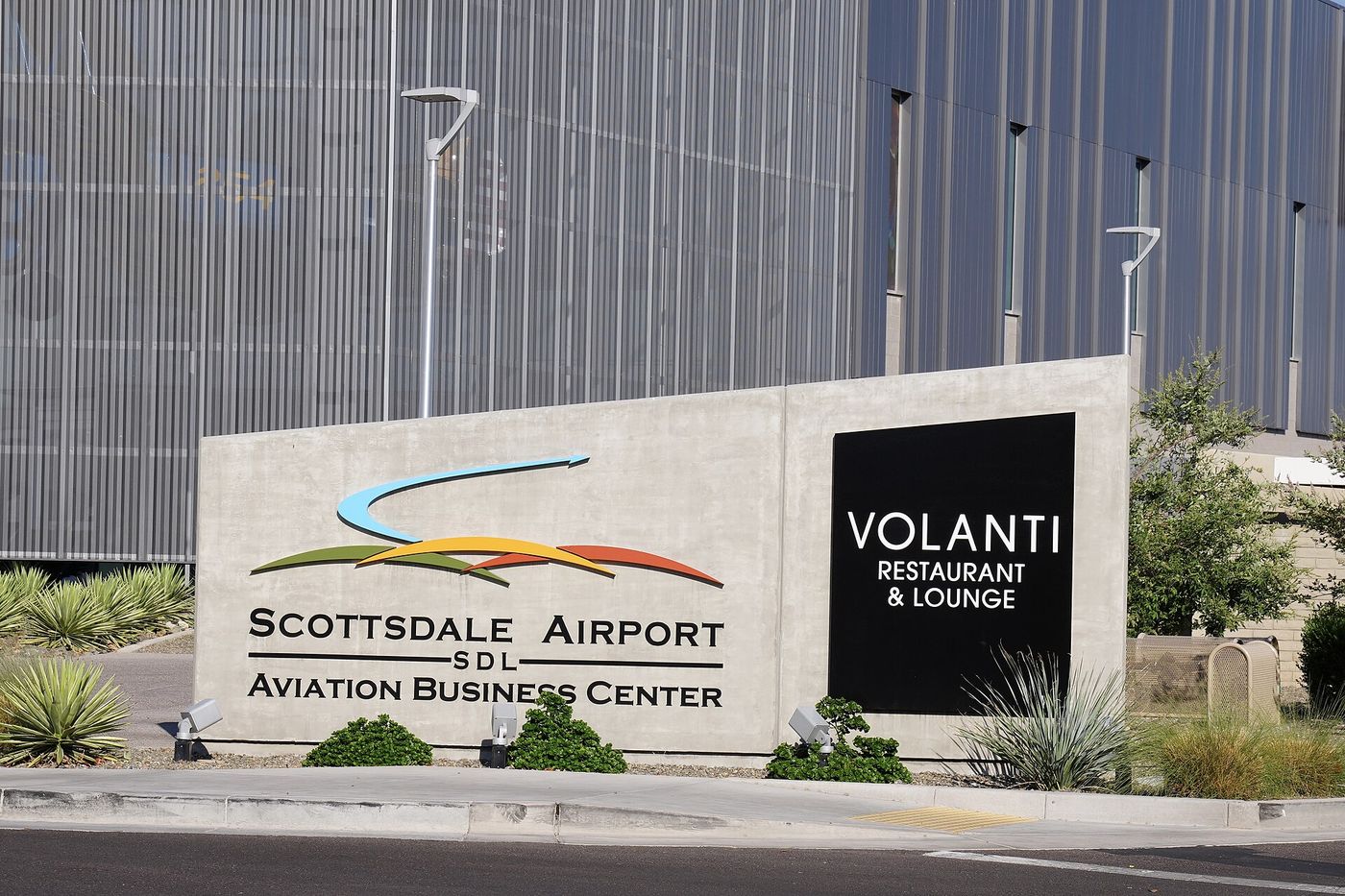
The first fixed-base operator was open by April 1967, and on June 16, 1967 Scottsdale Municipal Airport officially opened. The first business jets landed in August. By December 1969 the field was home to 127 airplanes and 20 helicopters, and the taxiways the city ran out to private hangars on the surrounding land had produced something no one had quite planned: companies that wanted an office beside their airplane. That was the Scottsdale Airpark, and it grew into one of the largest employment centers in Arizona — thousands of businesses on the section lines around the runway, corporate aviation up front, offices and light industry behind.
The airport itself became the busiest single-runway general-aviation field in the United States. Pat Mathiesen’s bronze One with the Eagle went up at the entrance in 1989 (Scottsdale Public Art’s completion date), and the Thunderbird Field II Veterans Memorial, a 1942 Stearman mounted over granite, now greets arrivals with the first chapter. The Thunderbird Field II guide covers the memorial; the 1960s chapter covers the boom that made a farm town want a runway.