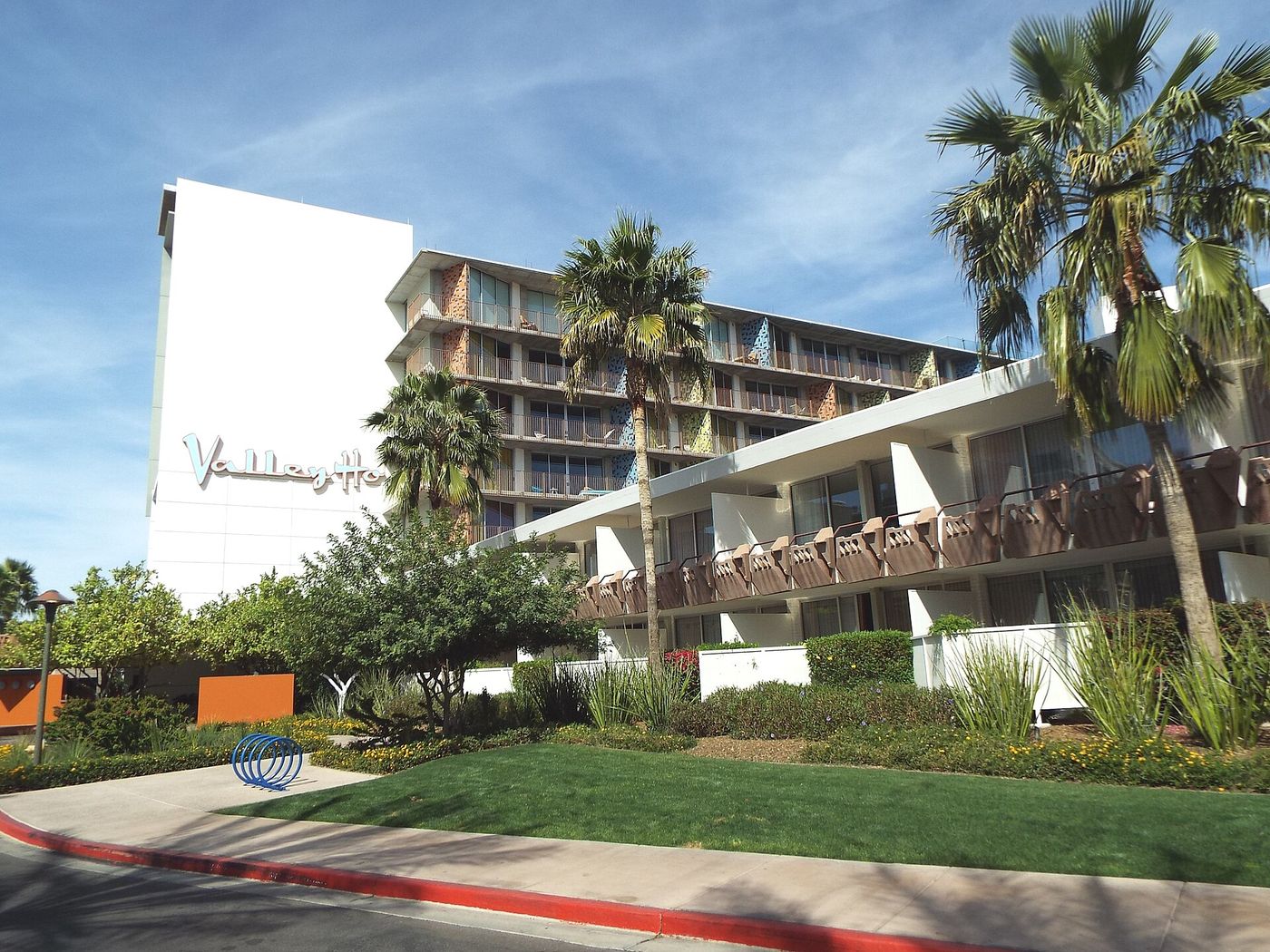
Modernism moves in next to the hitching posts
By 1956 Scottsdale had spent five years legislating its western character — storefront requirements, board sidewalks, a rodeo parade — so the boldest thing a developer could do downtown was build something defiantly modern. Edward L. Varney, trained under Frank Lloyd Wright, delivered exactly that: a low horizontal composition of glass, concrete, and desert light, sitting blocks from Main Street’s hitching posts. With the Safari Hotel opening the same year, the resort town suddenly had a modern wing — and nightlife to go with it.
The contradiction turned out to be the product. Tourists could shop the western stage set by day and drink somewhere sleek by night; the town was selling the desert winter in two packagings at once, and both sold out. Winter after winter the Hollywood set made the Ho its address — Bing Crosby signed the guest book, and within a year Natalie Wood and Robert Wagner brought their wedding reception here, sealing the hotel’s reputation as the film colony’s discreet desert hideout.
The survivor
Nearly everything else from Scottsdale’s Hollywood winter era is gone. The Safari came down; the celebrity circuit moved on; the town grew a hundredfold around the old square mile. The Valley Ho very nearly followed — it faced demolition before a 2005 restoration returned it to service as one of America’s best-preserved midcentury resort hotels. It is the rare landmark you can still check into: the same horizontal lines, the same desert light, sixty-plus winters after the first guests arrived.
That survival gives December 20 an unusual afterlife. Most days in this archive persist as documents; this one persists as a building, still working its original job on its original corner. The rest of the hotel’s first year is at 1956, and the era it anchored is in the 1950s chapter.