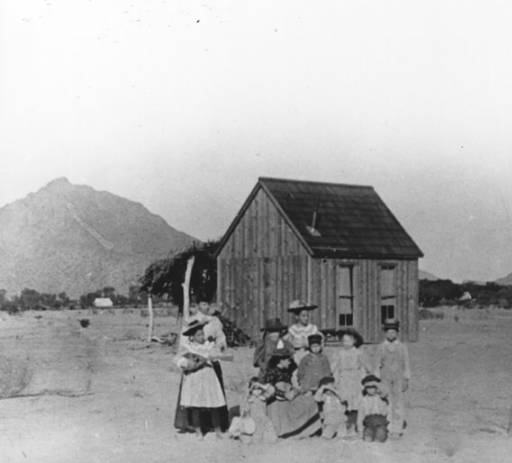
The founding era runs from Winfield Scott’s 1888 land filing to the eve of the founder’s death and the completion of Roosevelt Dam — twenty-one years in which a square mile of creosote flats acquired a name, a school, a store, a post office, and a future.
The arc is simple and dramatic: the Arizona Canal (1885) made the land farmable; Scott’s recruiting filled it with sober Midwestern farm families; the name “Scottsdale” replaced the failed citrus dream of “Orangedale” in 1894; and just as the little colony found its feet, a multi-year drought nearly killed it. Salvation came from the settlers’ own audacity — pledging their farms in 1903 to fund Theodore Roosevelt Dam under the new Reclamation Act. By 1909 the town had its brick Little Red Schoolhouse, its first resort next door at the Ingleside Inn, and 267 residents counted the following year.
The decades of this era
- The 1880s — The Founding Era: Hohokam inheritance, the Arizona Canal, and the Scott brothers’ first plantings.
- The 1890s — The Settlement Takes a Name: Utley’s townsite, the fire of 1895, the 1896 schoolhouse, Davis’s store and post office.
- The 1900s — Water, Lungers & Brick: the drought crisis, the Salt River Project gamble, health-seekers in tent cottages, and the banner year of 1909.