The 1930–1949 era is Scottsdale’s identity-forging span: two decades in which the town learned that its most durable exports were sunshine, western romance, and craft — and picked up an airfield, an architecture school, and a veterans’ migration along the way.
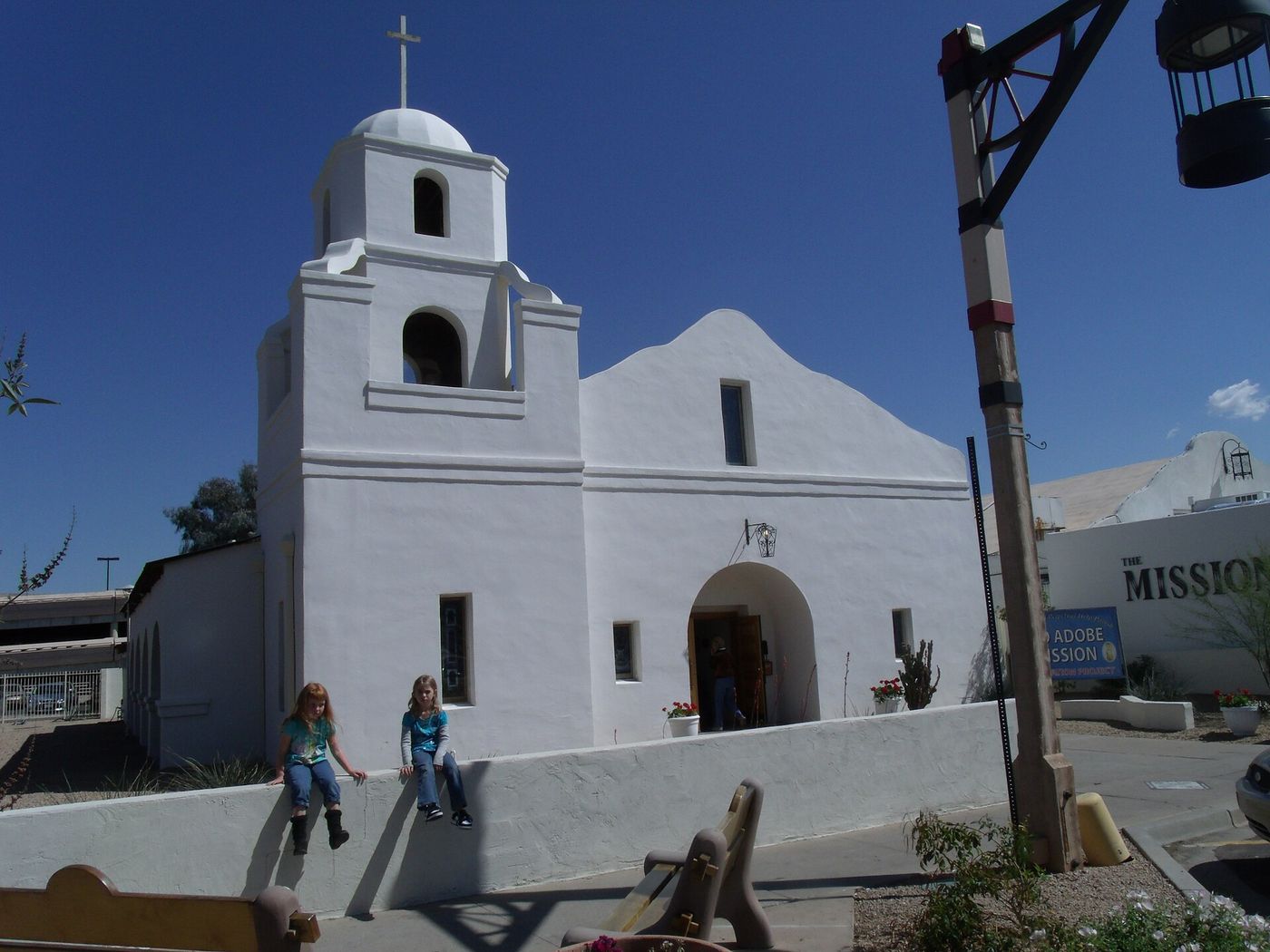
The Depression closed the Farmer’s State Bank (1933) but filled the guest ranches: easterners who could still afford winters kept the town in cash. The same hard year, the town’s Mexican-American families hand-built the Old Adobe Mission; four years later Frank Lloyd Wright planted Taliesin West in the McDowell foothills (1937). Then the war arrived: Thunderbird Field II (1942) trained thousands of pilots over the alfalfa, German POWs staged the largest escape on U.S. soil from Camp Papago Park (the night of December 23, 1944), and the peace delivered veterans, the Arizona Craft Center (1947), the Rural Fire Protection Company (1948, later Rural/Metro), and a chamber of commerce already rehearsing the phrase “The West’s Most Western Town.”
The decades of this era
- The 1930s — Dude Ranches & Wright: Depression economics, the Mission, the Camelback Inn, Taliesin West, and four inches of snow.
- The 1940s — War Comes to the Desert: Thunderbird II, the Papago escape, and the postwar craft colony that set up the boom.