Why she matters
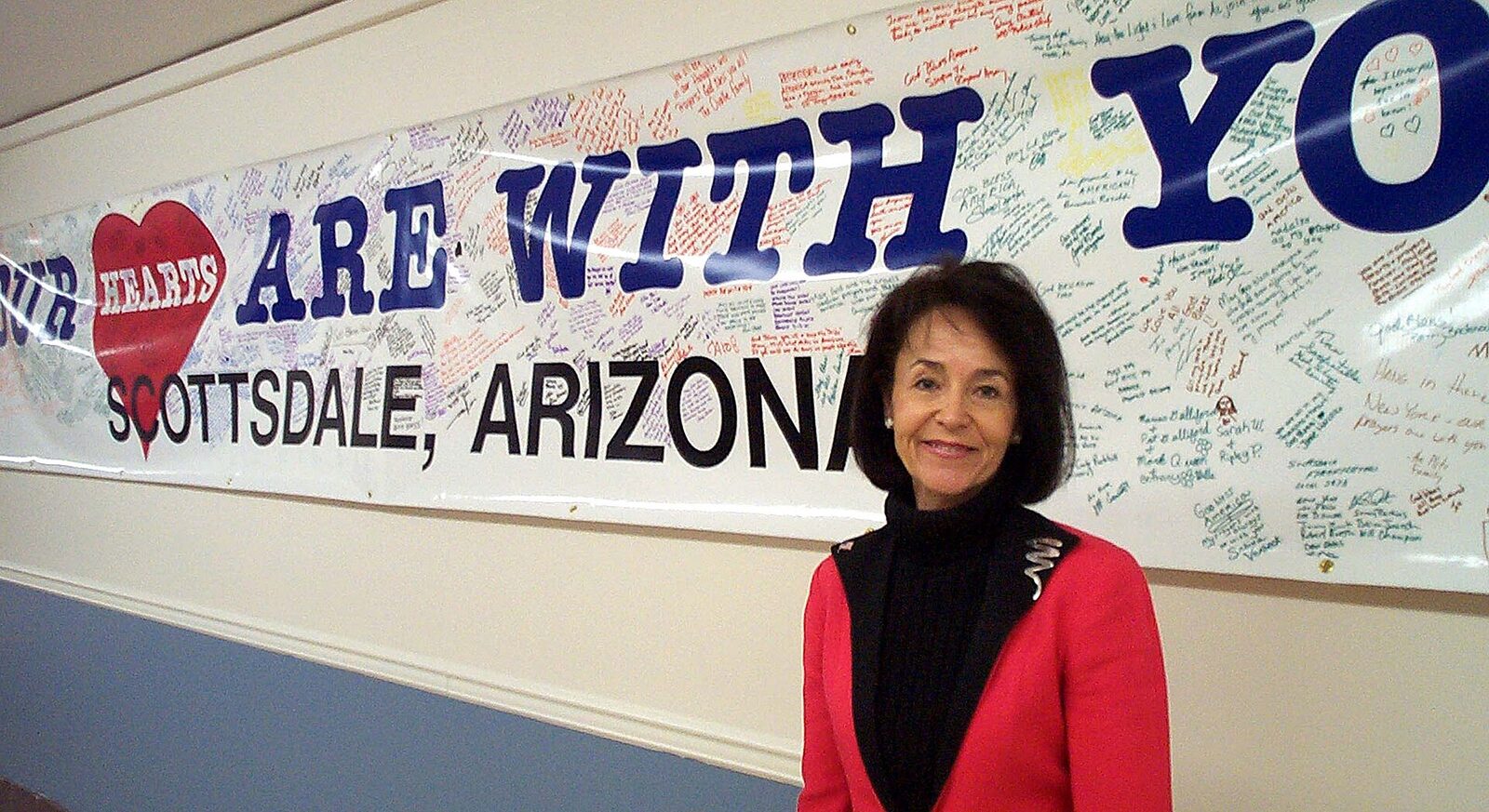
Mary Manross was mayor for the decade Scottsdale got a skyline. After eight years on the council she took office in 2000 and served into January 2009, the stretch that brought Loop 101, condo towers on the Arizona Canal, the rescue of the Hotel Valley Ho, SkySong on the corpse of Los Arcos Mall, and finally the crash.
For the Preserve, her years mattered for one vote. In 2004 the city went back to the voters for more money, and they gave it: a second sales tax that kept land purchases going when prices were high and kept the money coming when the economy stopped.
Where to find her mark today
The Preserve. The McDowell Sonoran Preserve grew well past its early acreage on the 2004 tax.
Gateway Trailhead. The Gateway Trailhead opened in 2009, in the teeth of the recession, on land those purchases secured.
The 2004 vote
May 18, 2004 was the second time Scottsdale voters taxed themselves to buy a mountain range, after 1995, and their fifth Preserve funding vote in a decade, counting the bond votes of 1996 and 1999 and the 1998 boundary vote. Land prices were climbing with everything else in the boom, and the argument was simple: buy the desert now or watch it become someone’s view lots. The 2004 page tells how that tax kept collecting through the bust while cranes stopped everywhere else.
The full story
Mary Manross was elected to the council in March 1992, topping a field of six, and in 1996 won re-election outright with more votes than any other council candidate. In 2000 she ran for mayor. “The polarization which has taken place over the past several years has been disturbing and I found myself disagreeing more and more with our current Mayor,” she wrote in the city’s candidate pamphlet. “That is why I stepped forward to challenge the incumbent.” Sam Kathryn Campana did not run, and Manross beat former councilman Ross Dean in a May runoff, 17,964 to 14,298. She took office in 2000, as the census counted 202,705 residents after a decade of better than 55 percent growth. The new century gave the city things it had never had. The Pima Freeway’s last Scottsdale segment opened in April 2002; the Scottsdale Waterfront lined the canal with shops and the city’s first real high-rise condominiums; the faded Valley Ho reopened in December 2005 after an $80 million restoration; and the ASU Foundation’s 2004 purchase of the Los Arcos site, which it sold to the city, put SkySong there by 2008.
Through it all the Preserve kept buying. The 2004 tax added 0.15% to the 0.2% passed in 1995, and the purchases carried on, parcel by parcel, toward the more than 30,000 acres the Preserve holds today.
Her years were full of ballot fights. On July 2, 2003 she signed the council’s 4 to 3 resolution approving a 40-year sales-tax share with the developer of a Walmart center on the Los Arcos site; voters rejected it on March 9, 2004, 29,444 to 5,856 (see the Los Arcos referendum). The same day she led a four-way mayoral race with 47.26 percent, and in May she beat Councilman David Ortega, 21,949 to 11,007. In 2006 she argued for the council’s rewrite of the sexually oriented business code, which voters rejected, 16,781 to 15,543. She backed the city’s Loop 101 speed cameras, which began on January 22, 2006, and in December 2007 the council extended employment protections to gay and transgender city workers. That month, the Associated Press reported, Scottsdale police began asking arrestees about immigration status after a killing in Phoenix; Manross said of profiling, “I would not tolerate that.”
Then 2008 arrived, and metro Phoenix became one of the epicenters of the national housing collapse. A 2006 state law had moved the city’s elections to the fall, and in the first of them Jim Lane, a councilman who campaigned against “a culture of secrecy” at City Hall, beat her on November 4, 2008 by 590 votes, 51,848 to 51,258. She left office in January 2009. The decade is told in full in the 2000s chapter.