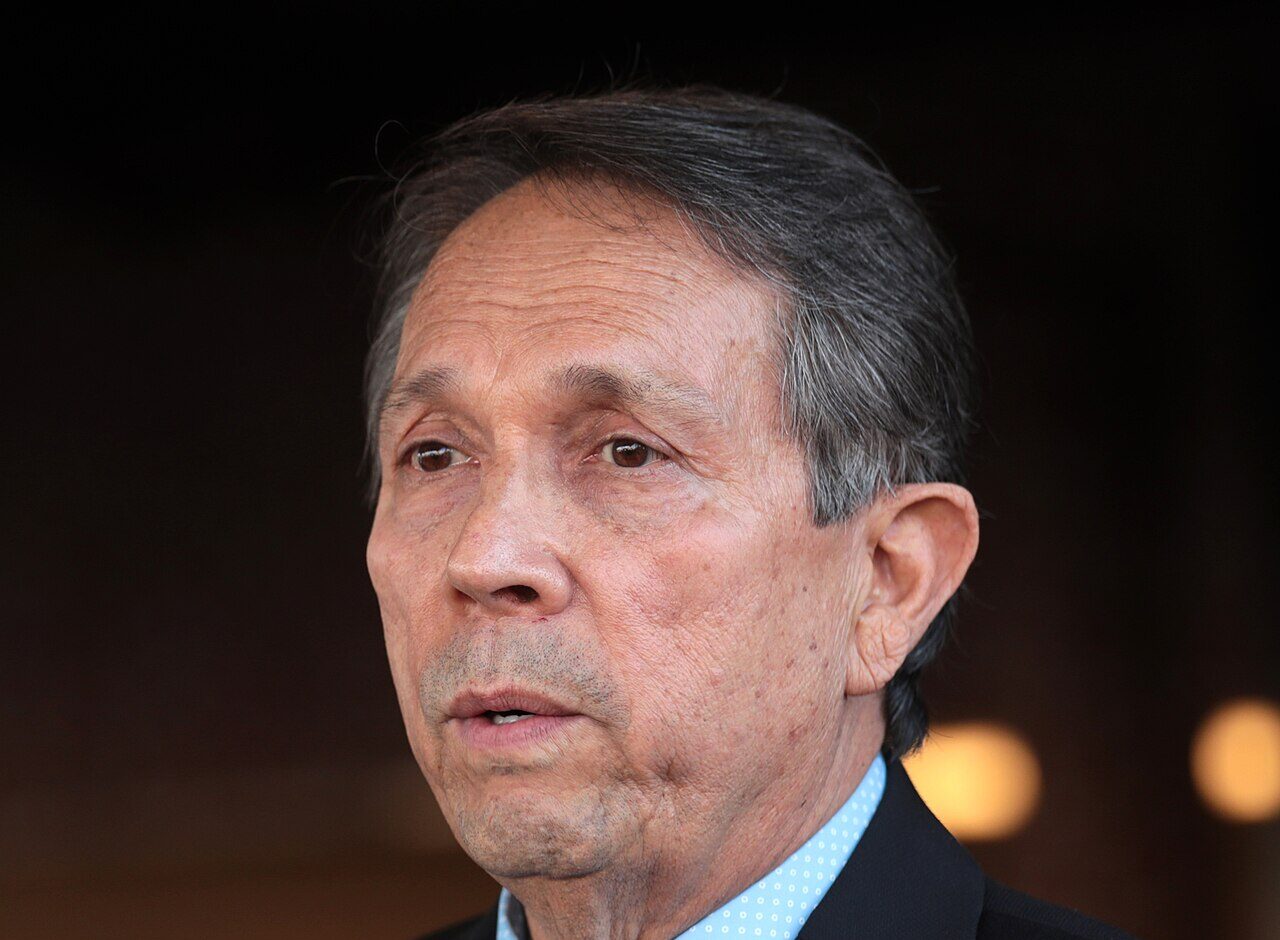
Why he matters
David Ortega’s term was short and crowded. An architect, he became mayor in 2021, seventy years after incorporation, just as the visitor economy that had gone dark in 2020 came back harder than anyone forecast. The rebound brought record resort rates and the problems that come with them, and the questions of his four years were ones nobody had put on the 1951 ballot: apartment towers, drought triggers and a tech campus by the freeway.
Where to find his era today
The Civic Center. The renovated Scottsdale Civic Center reopened in 2023, giving Bennie Gonzales’ 1968 buildings their first major refresh as an events venue.
The two big fights
The first was water. On January 1, 2023, Scottsdale stopped selling hauled water to Rio Verde Foothills, whose 500-plus homes outside city limits had relied on trucked Scottsdale water; the story drew worldwide coverage until a standpipe deal restored supply. The second was Axon’s expanded headquarters near Loop 101, approved by the council in 2024 and immediately challenged by referendum petition. The election that ended his term, November 5, 2024, was fought largely on that ground.
The record, year by year
2020. With Jim Lane term-limited, the August 4 primary drew five candidates and no majority. Ortega led with 15,076 votes, 21.20 percent, 226 ahead of Lisa Borowsky, with Virginia Korte, Bob Littlefield and Suzanne Klapp within two points. On November 3 he beat Borowsky 72,467 to 66,571, 51.99 percent, on an 86 percent turnout, by the city’s canvass. In December, before taking office, he proposed cutting the Old Town Character Area Plan’s height allowances to 36, 52 and 72 feet and abolishing the “Type 2.5” category behind the Southbridge Two towers.
2021. He was sworn in on January 12. On April 20 he signed Ordinance No. 4497, the nondiscrimination ordinance the council had adopted unanimously after six years of argument; the LGBTQ Scottsdale note has its terms. The council adopted General Plan 2035 on June 8, and on November 2 voters ratified it, 28,488 to 25,942, 52.34 percent, nine years after rejecting the plan before it. A June work session reached consensus on his Old Town heights, and the council initiated the amendment in August.
2022. After the state let cities license short-term rentals, the council passed Ordinance 4566 unanimously on October 25. In November it approved Optima McDowell Mountain Village, 1,330 units in buildings of eight to ten stories near the Mayo campus, 4 to 3, with Ortega, Tammy Caputi, Tom Durham and Linda Milhaven for and Kathy Littlefield, Betty Janik and Solange Whitehead against.
2023. The Rio Verde Foothills cutoff took effect on January 1. After the Legislature created a standpipe district in June, the council approved the intergovernmental agreement unanimously on September 5, EPCOR supplying the water and Scottsdale treating it, and Ortega closed the vote: “Thank you, it’s unanimous. Good luck.” Deliveries resumed in October. In June he billed the city’s Juneteenth celebration at the Civic Center as “the highlight of June Days.”
2024. The council acted on the Old Town heights in February, on a staff proposal of 48 feet, 40 in the core, 66 in two districts and up to 84 at the edges. On May 6 it voted unanimously to tighten the rental rules, and Ortega called the rentals a hazard. He led the July 30 primary, 40.61 percent to Borowsky’s 38.70, lost the November 5 general, 59,900 votes to 71,089, and presided on November 19 when the council approved Axon’s rezoning 5 to 2.
The full story
Ortega’s first turn in city politics came two decades before his mayoralty. He won a council seat in the May 16, 2000 runoff with 16,830 votes, the most of any council candidate, and served until June 2004. He voted against the council’s 2003 agreement to share sales taxes with the developer of a Walmart center on the Los Arcos site and argued against it on the March 2004 ballot: “Scottsdale cannot afford to pay a truant developer to leave town with our money.” Voters rejected it 29,444 to 5,856 (see the Los Arcos referendum). The same day he finished second to Mayor Mary Manross with 21.33 percent, and in the May runoff she beat him 21,949 to 11,007.
David Ortega took office in 2021, succeeding Jim Lane. Within city limits, the water system held through the Colorado River shortages that triggered the Drought Management Plan; the sharpest edge of the plan fell on an unincorporated community outside them.
Growth was the larger argument. The council’s approval of Axon’s campus, with nearly 2,000 apartments and a hotel, handed the 2024 campaign its defining issue. Lisa Borowsky ran against high-density development and city spending; Ortega defended his record, and she won with about 54%. It was the second consecutive mayoral turnover decided on growth. The rest is in the 2020s chapter.
How the record is read
The sources agree on the votes and divide on what they add up to. KJZZ’s analysis of the 2020 race found that both finalists had run on “returning a voice to residents in development deals” and that Ortega was the one “skeptical of developers”; the 2020s politics chapter notes that the General Plan passed in 2021 with a mayor who had been elected on the skeptics’ side. His own account in 2024, as azfamily summarized it in October, was that he was “pro-development” but for low density citywide, and he pointed to the General Plan voters had approved.
His opponents read the same years differently. Councilwoman Kathy Littlefield, voting against Optima in 2022, said “higher, denser, bigger is not what our citizens voted for,” and the line became the 2024 campaign’s text; of the four yes votes on Optima, two years later one was a defeated mayor, two were defeated council members and one had run third for mayor. Critics also said his Old Town height limits had caused a housing shortage, while he pointed to them as a promise kept. Borowsky called for rejecting “density-focused development” and reining in “wasteful spending.” On water, the city’s position under Ortega was that its drought plan required ending deliveries to non-residents and that the county had failed to form a district; Rio Verde residents said the cutoff left them trucking water from farther away at several times the price.
His first term in office, and the 2004 race
The council years are in the 2000s politics chapter. He took office in June 2000 alongside Ned O’Hearn after the May runoff, and on July 2, 2003 he voted no when the council approved, 4 to 3, a redevelopment agreement for a Walmart center at Los Arcos. The referendum committee, STOP’EM, and the Chamber of Commerce made the case against it on the March 9, 2004 ballot, and Ortega’s line was “Scottsdale cannot afford to pay a truant developer to leave town with our money.” The March 9, 2004 day page has the result, 29,444 to 5,856. That day he took 7,627 votes for mayor, second to Mary Manross, and in the May runoff she won 21,949 to 11,007. The Los Arcos land went to the ASU Foundation and became SkySong.