Skip to content
Visiting or new to Scottsdale? Start here
Scottsdale.tips
Founders & Pioneers Statehood & the Farm Town 1863–1923 Farmer, Power-Company Founder and Legislator

Charles Miller: The Farmer Who Bought Winfield Scott's Orchard, Brought Scottsdale Electricity and Gave It a High School

Charles Miller, born in Iowa in 1863, came to Scottsdale in 1908 and farmed land Winfield Scott had first irrigated. After Scott died he bought 80 acres of Scott's own orchard and vineyard at Scottsdale and Indian School roads and built a Craftsman bungalow there. He co-founded the town's first electric company in 1918, gave ten acres for Scottsdale High School, and died in 1923 during his first term in the state legislature. Miller Road is named for him.

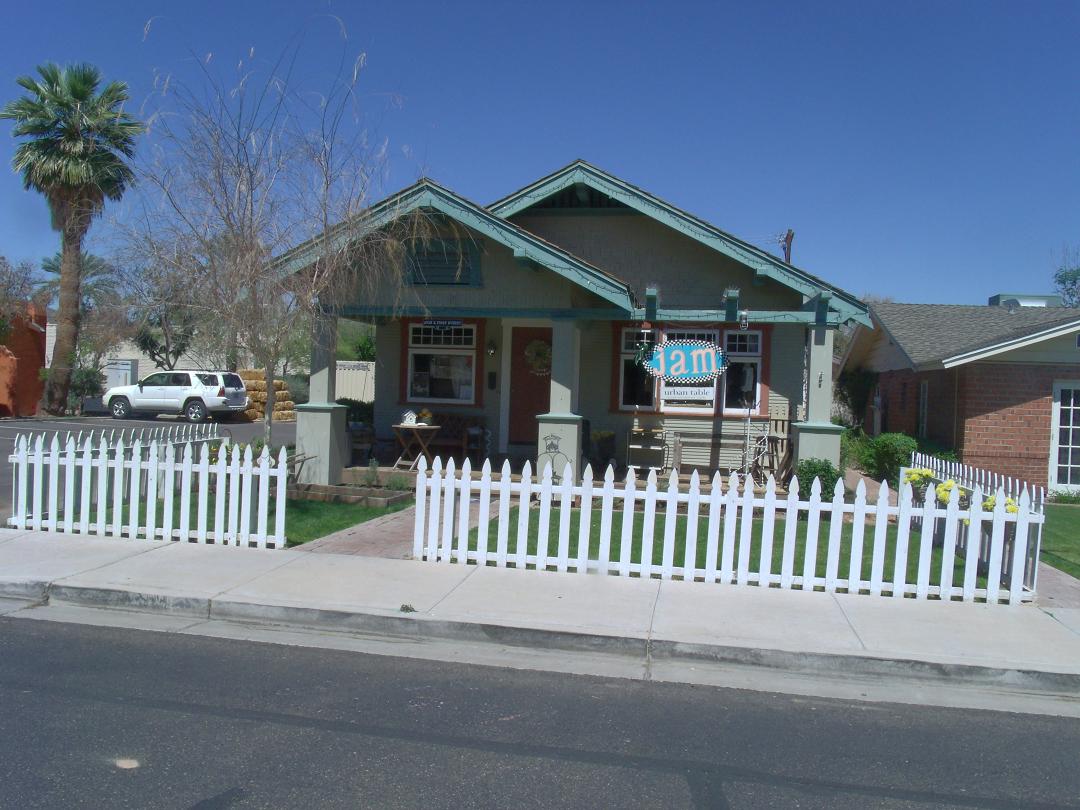
The Charles Miller House, built about 1913 in Scottsdale, Arizona
The Charles Miller House, a c. 1913 Craftsman bungalow, moved twice and now on First Street. Photo: Tony the Marine, CC BY-SA 3.0, via Wikimedia Commons.

The 30-second version

  • Born in Iowa in 1863. His family moved to South Dakota, where the town of Miller was named for his father. He married Ella Bates, and they had two children, Bill and Murle.
  • The family came to Phoenix in 1907, and in 1908 Miller bought 120 acres at what is now Indian School and Miller roads, land Winfield Scott had acquired in 1888.
  • He and Scott sat on the board of the Orange Belt and Scottsdale Railroad Company in 1908, a trolley plan that died with Scott in 1910. In 1913 Miller bought 80 acres of Scott's orchard and vineyard from the family and built a small Craftsman bungalow.
  • In 1918 he co-founded Scottsdale Light and Power with E.O. Brown and William E. Kimsey. He gave ten acres for Scottsdale High School and served three terms on the school board.
  • Elected to the state legislature in 1922, he died in 1923 during his first term. His house survives, moved twice, at 6938 E. 1st St.

Lived

1863–1923

Scottsdale years

1908–1923

Known for

Farming Winfield Scott's land, co-founding Scottsdale Light and Power and donating the land for Scottsdale High School

Decade chapters

1900s, 1910s, 1920s

Their name & work today

  • Miller Road
  • The Charles Miller House (c. 1913), on the Scottsdale Historic Register
  • The ten-acre site of Scottsdale High School (1922–1983)

Why he matters

Charles Miller connects Scottsdale’s founder to the farm town that came after him. He came in 1908, farmed land Winfield Scott had first irrigated, and served on Scott’s trolley company board. After Scott died he bought Scott’s own orchard. Over the next decade he helped bring the town electricity, gave it its high school, and won a seat in the legislature. He died in office in 1923. Miller Road carries his name.

Where to find his mark today

The Charles Miller House. His c. 1913 Craftsman bungalow, moved twice to save it, is at 6938 E. 1st St., just west of Goldwater Boulevard. It’s private property.

Scottsdale High School. It stood on the ten acres he gave on Indian School Road from 1922 until it was demolished between 1987 and 1992.

The farmer on Scott’s land

The city’s 2009 register report on his house is the fullest account of Miller. He was born in Iowa in 1863. His family moved to South Dakota, where the town of Miller was named for his father. He married Ella Bates, and they had two children, Bill and Murle. The family came to Phoenix in 1907 and in 1908 bought 120 acres on the Arizona Canal at the northeast corner of Indian School Road and what is now Miller Road. Scott had acquired that land in 1888 under the Desert Land Act.

Miller and Scott were allies. Both sat on the board of the Orange Belt and Scottsdale Railroad Company in 1908, with Scott as president, a plan for a trolley from Phoenix. The plan died with Scott in late 1910. In 1913 Miller bought 80 acres at the northeast corner of Scottsdale and Indian School roads from Scott’s family, including the ten acres of orchard and vineyard Scott and his brother George had planted beginning in 1889. Miller kept farming it and built a small wood-frame Craftsman bungalow there. He may have bought it from a catalog or as a set of plans; the report says nobody knows which.

Lights, a high school and the legislature

In 1918 Miller joined E.O. Brown and William E. Kimsey, father of Mort Kimsey, in founding Scottsdale Light and Power. It bought electricity that the Salt River Project generated at the falls on the Arizona Canal near 56th Street and Indian School Road. Central Arizona Light and Power bought the company in 1939, and that company later became APS.

He gave ten acres on Indian School Road for Scottsdale High School, which opened for the 1922–23 school year, and served three terms on the school board. The first graduating class, in 1923, had three students: Hunter Chesnutt and his own children, Bill and Murle Miller. Miller was elected to the state legislature in 1922 and died in 1923, during his first term.

The family stayed in the bungalow until about 1955, when the corner was redeveloped and the house was moved to 75th Place north of Thomas Road. In 2000–01 owner Richard Funke moved it again, to First Street, and restored it, and the city listed it on the Scottsdale Historic Register on February 16, 2010. The house guide has the details, and the farm-town era covers the town he helped build.

Where to find Charles Miller on this site

The places they founded, built, saved or gave their name to — each with its own guide.

Charles Miller by the numbers

1863, Iowa

Born

1908

Came to Scottsdale

1918

Scottsdale Light and Power

1923, in the legislature

Died

A life in Scottsdale: the timeline

  1. 1863

    Charles Miller is born in Iowa. His family later moves to South Dakota, where the town of Miller is named for his father.

  2. 1907–1908

    The Millers move to Phoenix and then buy 120 acres at what is now Indian School and Miller roads. Miller joins Winfield Scott on the board of the Orange Belt and Scottsdale Railroad Company, a plan for a trolley from Phoenix.

  3. c. 1913

    After Scott's death, Miller buys 80 acres at the northeast corner of Scottsdale and Indian School roads from Scott's family, including Scott's orchard and vineyard, and builds a Craftsman bungalow.

  4. 1918

    With E.O. Brown and William E. Kimsey he founds Scottsdale Light and Power, the town's first electric company.

  5. 1922–1923

    Scottsdale High School opens on ten acres he donated, and his children Bill and Murle are two of its three first graduates. Elected to the state legislature in 1922, he dies in 1923 during his first term.

  6. 1955

    The family leaves the house, and it is moved off the corner to 75th Place. It is moved again in 2000–01 and listed on the Scottsdale Historic Register in 2010.

Questions people actually ask

Who was Charles Miller in Scottsdale history?

A farmer and civic founder, born in Iowa in 1863, who came to Scottsdale in 1908. He farmed land first irrigated by Winfield Scott, co-founded the town's first electric company in 1918, donated ten acres for Scottsdale High School, served three terms on the school board and was elected to the state legislature in 1922. He died in 1923. Miller Road is named for him.

When was the Charles Miller House built?

About 1913, on the 80 acres Miller bought from Winfield Scott's family at Scottsdale and Indian School roads. It's a small, one-story wood-frame Craftsman bungalow, about 24 by 30 feet. The city's register report says he may have ordered it from a catalog or bought the plans; nobody knows which. It was moved in 1955 and again in 2000–01 and now stands at 6938 E. 1st St.

Is Miller Road named after Charles Miller?

Yes. The city's register report says Miller Road is named for him in recognition of his part in the town's early growth. His first Scottsdale land, bought in 1908, was at the corner of Indian School Road and what is now Miller Road.

Vernacular & LexiconIndian School RoadThe trolleySRP vs. APSThe Arizona CanalGoldwater Boulevard / Drinkwater BoulevardSRPMIC (the Community)The Salt River

Facts checked: October 3, 2026 • Curated by the Scottsdale.tips editors • Dates follow the Scottsdale Historical Society and city records where sources disagree; corrections are welcome.