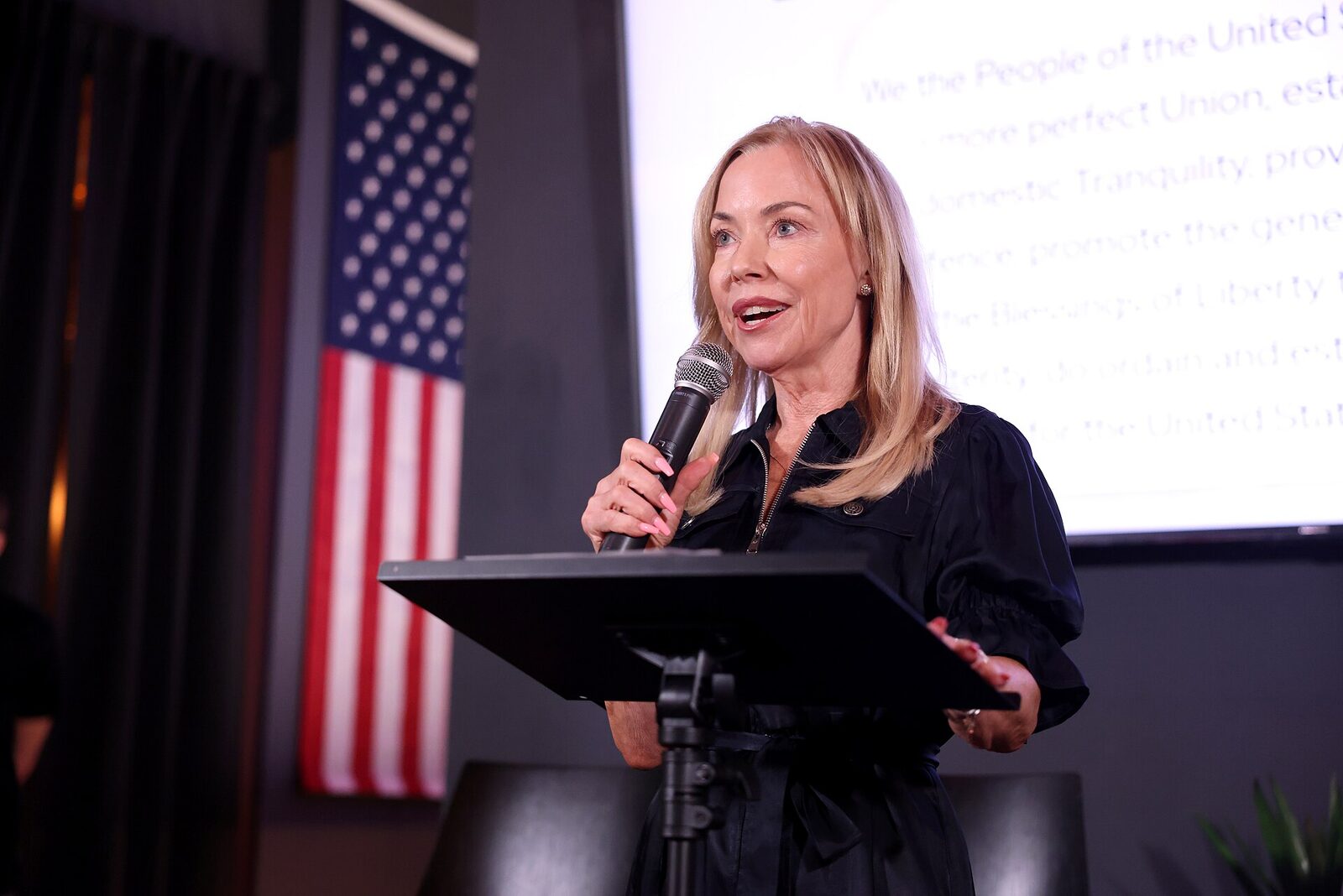
Why she matters
Lisa Borowsky’s election made growth the decisive question in 2020s Scottsdale politics. An attorney and former councilwoman, she ran squarely against high-density apartment development and city spending, and on November 5, 2024, about 54 percent of voters chose her over the incumbent, David Ortega. It was the second mayoral turnover in a row decided on that argument.
Where to find her era today
Her term is still being written. The places to read it are the 2020s chapter and the new West era, which cover the Axon dispute and the growth debate that framed her election.
The election
November 5, 2024 tells the story of the race: the council’s approval of Axon’s expanded campus near Loop 101, with nearly 2,000 apartments and a hotel; the referendum petition with more than 20,000 signatures; and a challenger who ran on a slower Scottsdale. The 2025 page covers what came next.
The two races
Borowsky’s path to the mayor’s office ran through a loss. She served one term on the council, 2009 to 2013, elected in 2008, and did not run again. In 2020, with Jim Lane term-limited, she entered a five-way August primary against David Ortega, Virginia Korte, Bob Littlefield and Suzanne Klapp, and finished second to Ortega by 226 votes, 14,850 to 15,076, by the city’s canvass. In the November general both candidates ran on giving residents a louder voice in development decisions; Ortega, a longtime Democrat turned independent, won 72,467 to 66,571, about 52 to 48, and KJZZ’s post-mortem suggested Borowsky’s identification with the Republican Party had limited her in a city that voted narrowly for Trump the same day.
The 2024 rematch reversed it. The council’s November 2024 approval of Axon’s expanded campus, the referendum petition that followed, and the Rio Verde Foothills water cutoff of 2023 framed the year; Borowsky called for rejecting “density-focused development” and reining in “wasteful spending,” Ortega called himself pro-development but for low density and pointed to the General Plan voters had approved in 2021. Ortega led the July primary, 40.61 to 38.70 percent, with Linda Milhaven third; Borowsky won the general on November 5 with about 54.3 percent, and two council incumbents who had voted for Axon lost the same night. The November 5, 2024 day page and the 2020s politics chapter have the campaign.
The full story
Lisa Borowsky came to the mayor’s race as an attorney and a former member of the City Council. She challenged one-term incumbent David Ortega in 2024, as the Axon headquarters approval made growth the campaign’s defining issue, and she won with about 54%.
She was sworn in in January 2025 pledging limits on high-rise apartment growth. The election’s biggest issue then left the city’s hands: Axon paused its groundbreaking, and in 2025 state lawmakers passed legislation letting the project proceed without the local vote. How the argument over local control and growth plays out from here is the open question of the decade.
The first year, in the record
Borowsky took office on January 14, 2025, and the council she presides over has divided 4 to 3 on most contested votes, with Adam Kwasman, Jan Dubauskas, Barry Graham and Kathy Littlefield on one side and the mayor, Maryann McAllen and Solange Whitehead on the other, by the Scottsdale Progress’s account. The year’s record, as the newspapers and the council’s own minutes give it: the city manager, Bill Murphy, resigned in January and the council named Greg Caton interim and then, in April, permanent on a 5 to 2 vote; the mayor’s proposal to reestablish a Citizens Budget Commission went nowhere; in February the council ended city funding for diversity programming with the mayor’s vote; and a dispute over a downtown parking garage, in which the mayor proposed a design by a campaign donor and three council members reported their suspicions of procurement violations to county detectives, ended with the county attorney declining to act and the mayor calling the episode “an attempted palace coup.” In August the city manager put in writing that “the mayor does not possess unilateral authority to direct or issue orders to the city manager.”
On the question that elected her, the record is more settled. She urged Governor Hobbs to veto SB 1543, the 2025 law that let Axon’s headquarters-linked housing proceed without the referendum, and the governor signed it in April. In November 2025, after a negotiation she had opposed in its first form, she voted with the 4 to 3 majority for a memorandum of understanding that cut the project to 600 apartments and 600 condominiums, saying the agreement “creates finality”; the dissenters argued that without a deed restriction the company could still build more. The lawsuit against the state law continues, and the 2025 and 2026 year pages carry it. Her own account of her program is the January 2025 interview with KJZZ: “The history of Scottsdale is not a bunch of high-rise apartments.” Her critics’ account is in the same chapter, in their own words. This profile records what the public record shows and will grow with it.