Why this category matters here
The McDowell Sonoran Preserve is the largest urban preserve in the country, and its trailheads are twenty minutes from a resort pool, which is the problem. People walk onto Gateway or Tom’s Thumb the way they would walk onto a city park path, with a bottle of water in each hand and no hat, and the Scottsdale Fire Department and the Maricopa County Sheriff’s mountain rescue unit go and get them. The pattern of the rescues is consistent: a start after 8 a.m. in summer, too little water, a turned ankle on the loose granite of a descent, a cholla segment in a hand. Add a sun that runs in the extreme UV range from May through September, and decomposed granite that chews the soles off a pair of running shoes in a season. None of this needs expensive gear to prevent. All of it needs the right gear carried every time, which is why the pack is on this list.
This page is the kit for anything beyond the Greenbelt: the Preserve, Pinnacle Peak, Camelback, the Superstitions on a day trip. The summer sunrise hiking rules are the operating manual; the Gateway Loop and Tom’s Thumb pages have the trail-by-trail water math. Sunscreen and sunglasses are in the In Town kit, because they go everywhere.
How these were tested
Every item here was bought at retail and carried through at least a full season of Preserve, Pinnacle Peak and Camelback hikes, including the summer dawn starts the rules call for. The reservoir was frozen a third full the night before and drunk from on July mornings; the Nalgene went in the freezer two-thirds full every night before a summer hike and survived being dropped on granite more times than we counted. The hat and the sun hoodie did summer dawn hikes at Gateway and Tom’s Thumb; the headlamp did the first dark mile of Tom’s Thumb enough times to learn which pocket turns it on; the shoes and socks did a winter of the Preserve and Camelback. The poles did Camelback’s Echo Canyon descent on tired knees, and the first aid kit’s tweezers pulled cholla spines out of a dog and two people. The combs cost four dollars and were the item we were most glad to have. Nothing here was sent by a brand.
The picks, in order
Water first. The CamelBak Crux 3-liter is the reservoir because its cap is a real handle you can fill at the trailhead fountain and the bite valve has an on/off lever, two small things that decide whether you use it. Liquid I.V. sticks are the electrolytes: one in a 32-ounce bottle, pre-mixed and drunk on the drive to the trailhead, because starting hydrated matters more than anything you do on the trail. The Nalgene is the bottle that goes in the freezer the night before, two-thirds full and on its side, so it thaws into cold water exactly when you need it; a vacuum bottle cracks if you try. The Osprey Daylite turns the rest of this page from a pile into a kit: the reservoir in its sleeve, a Nalgene in each side pocket, the first aid kit and the headlamp in the top pocket. Thirteen liters is a day on Camelback, not an overnight.
Then sun cover. The Bora Bora Booney is unfashionable, packs flat and has a chin cord that holds in the wind on the Pinnacle Peak saddle; a ball cap leaves the ears and neck to burn. The Terminal Tackle sun hoodie, bought a size up and in a light color, is the single thing that most changes how a Scottsdale summer feels outdoors; the fishing industry solved all-day sun before the hiking industry did. The Buff CoolNet does three jobs: sun on the neck, evaporative cooling when you soak it at the trailhead fountain, and a dust mask when the sky goes brown in August.
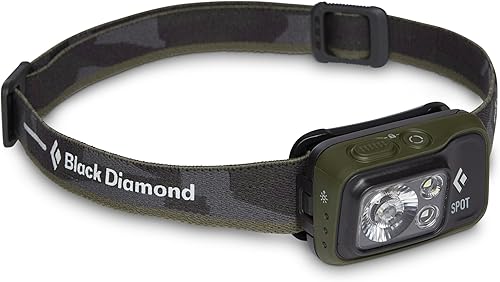
Then the light and the feet. The Black Diamond Spot 400 runs on AAAs that survive a summer in the glovebox, has a red mode for the saddle, and locks so a water bottle cannot switch it on at 2 a.m.; buy one per hiker, not one per group. The Merrell Moab 3, in the low, non-waterproof version, is the shoe for decomposed granite, and Darn Tough socks in midweight are the fix for blisters, the most common way a Preserve hike goes wrong.
Last, the things you hope not to need. The Adventure Medical Kits .5 is sized for what actually happens here, cholla, blisters and scraped palms, and small enough to stay in the pack. The pocket combs go in every pack and the car door; they are the tool the rescue volunteers wish every visitor carried. The Black Diamond trail poles are for descents on anything with real elevation.
Buy here or bring from home
Bring the shoes, broken in; a new pair of Moabs on a first-day hike is a blister story. Bring the hat and the sun hoodie too, because the first morning is when you need them, and the pack and the reservoir if you own them. Everything else is at every REI in the Valley, and the Scottsdale REI on Scottsdale Road is ten minutes from the Gateway trailhead. Buy the electrolyte sticks here and keep the box, not the tub, because the powder cakes in a hot car. The combs and the AAA batteries are at any drugstore. If you are renting a car, put the headlamp, a comb and a spare liter of water in it on day one and leave them there; the kit that is already in the car is the kit that goes on the hike.