Why this category matters here
Two things happen to every car in Scottsdale from May through September: the cabin becomes an oven and everything left in it is ruined. The physics is simple and the numbers are not exaggerated. A car parked in the sun on a 110-degree afternoon is over 150 degrees inside within an hour; the steering wheel blisters a palm, the seatbelt buckle brands a hip, the sunscreen on the passenger seat stops working, the dashboard cracks within a few summers. Nearly everyone drives here. The drive from the Airpark to Old Town is twenty minutes, and the car you get back into at the end of a round of golf or a hike is the hottest place you will be all day.
The other job is water, because the car is where the day’s water lives. Visitors drink from the bottles the hotel leaves in the room; locals keep a half-gallon jug in the passenger footwell that refills the smaller bottle they carry. The getting-around note explains why everyone drives here and the first-year note puts the sunshade on the day-one list. Three things, all of which live in the car, cover it; what not to leave in there is in the questions below.
How these were tested
The two shades went on a dark-colored car parked outdoors in Scottsdale through a full June to September, with the cabin checked by thermometer against a neighbor’s car without them. The Yeti rode the dashboard and the footwell through the same summer and was still rattling ice at dinner from a 6 a.m. fill. Everything was bought at retail, and the verdicts are ours.
The picks, in order
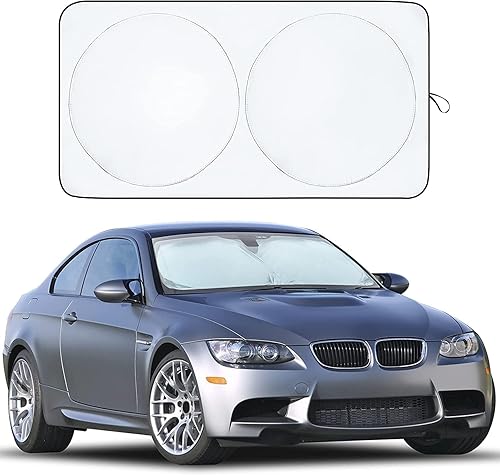
The EcoNour windshield shade is the highest return on this whole site for the price: twelve dollars, ten seconds to deploy, and the thing that makes a car survivable at 3 p.m. Buy the size EcoNour lists for your windshield; a shade with gaps is decoration. Put it up at every stop over fifteen minutes, including the trailhead.
The steering wheel sleeve goes on with it and covers the one surface the shade misses, the wheel that sits closest to the glass. Make the two one habit, check the wheel’s diameter before ordering, and tuck the seatbelt buckle under a towel, because neither shade covers that.
Then the jug. The Yeti Rambler half-gallon is the most-used item in the whole kit twelve months a year, and the right desert size: a liter bottle is a toy here, and a full gallon is too heavy to want to carry from the trailhead lot. The magnetic cap snaps to the handle instead of rolling into the footwell at the first hard stop on Loop 101, and it lives in the passenger footwell because it fits center consoles poorly.
Buy here or bring from home
Buy the shades here, on the first day, and buy them for the car you are actually driving; a rental’s windshield is not your car’s. Every Walmart, Target and auto parts store in the Valley stocks them in a dozen sizes, and most rental lots are a mile from one. Bring your own jug if you have one. If you do not, the Yeti is a hundred dollars and a decision; whatever you buy instead, make it double-wall stainless, because thin plastic warps on a dashboard and anything with a rubber gasket starts tasting like a pool toy. Whatever you use, the water goes in the car before you leave the hotel, not at the trailhead, because the trailhead fountain is sometimes off and the nearest store is sometimes twenty minutes back.