The road to the down payment
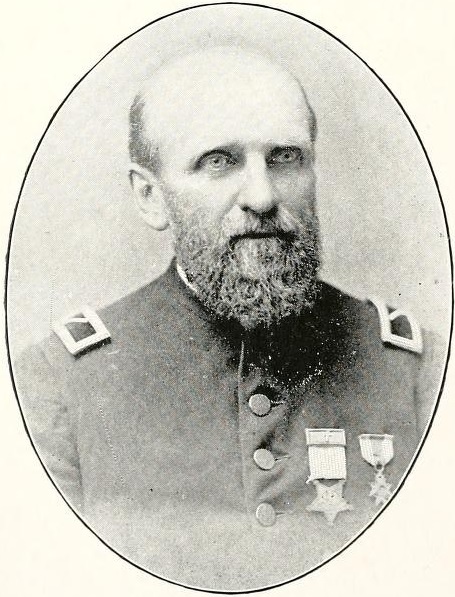
The transaction had a three-year fuse. In 1885, William J. Murphy’s crews finished the Arizona Canal, 41 miles of ditch dug clear around the north side of the Salt River Valley — the first canal routed through unbroken desert at a higher elevation than the old Hohokam alignments Phoenix had been farming on. That grade change opened a whole new tier of benchland to irrigation, and the Arizona Canal Company’s promoters fanned out across the country looking for buyers. Their literature found Winfield Scott, a Michigan-born Baptist minister then serving as an Army chaplain on the Pacific coast — a man named for the War of 1812 general (no relation) who had fought at Antietam and been badly wounded at Fredericksburg. He came to see the valley for himself in 1888 and concluded the promoters were, if anything, underselling it.
What he bought that July was a perfect square: one section, a mile on each side, with nothing on it but creosote, mesquite, and jackrabbits. The full price was $1,600 at $2.50 an acre; the down payment, at 50 cents an acre, was about $80 — filed under the Desert Land Act, which required him to prove the land could be watered. Thanks to the canal’s laterals along the property, it could.
What followed
Scott was still on active duty, so the claim sat empty until 1889, when his brother George Washington Scott — a Civil War veteran who had left a leg at Chickamauga — arrived to camp on the property, clear brush, and open the ditches. The brothers planted citrus, figs, almonds, grapes, peanuts, and barley, chasing Winfield’s dream of a citrus colony hopeful enough to be nicknamed “Orangedale.” Freezes killed most of the citrus; barley and the tougher crops survived; and in 1894 the settlement took the name Scottsdale instead. The founder spent the rest of his life recruiting sober Midwestern farm families onto and around his section, through the first school in 1896, the first store and post office in 1897, and the drought that nearly emptied the colony before the settlers pledged their farms to build Roosevelt Dam.
The purchase never stopped paying. The section’s boundaries survive as four arterial roads, Old Town sits inside them, and every page in this archive traces back to the $80 Scott put down. The rest of the founding year is at 1888, and the full decade — canal, claim, and first plantings — is in the 1880s chapter.