
What is Chaparral Park?
If Scottsdale has a living room, this is it.
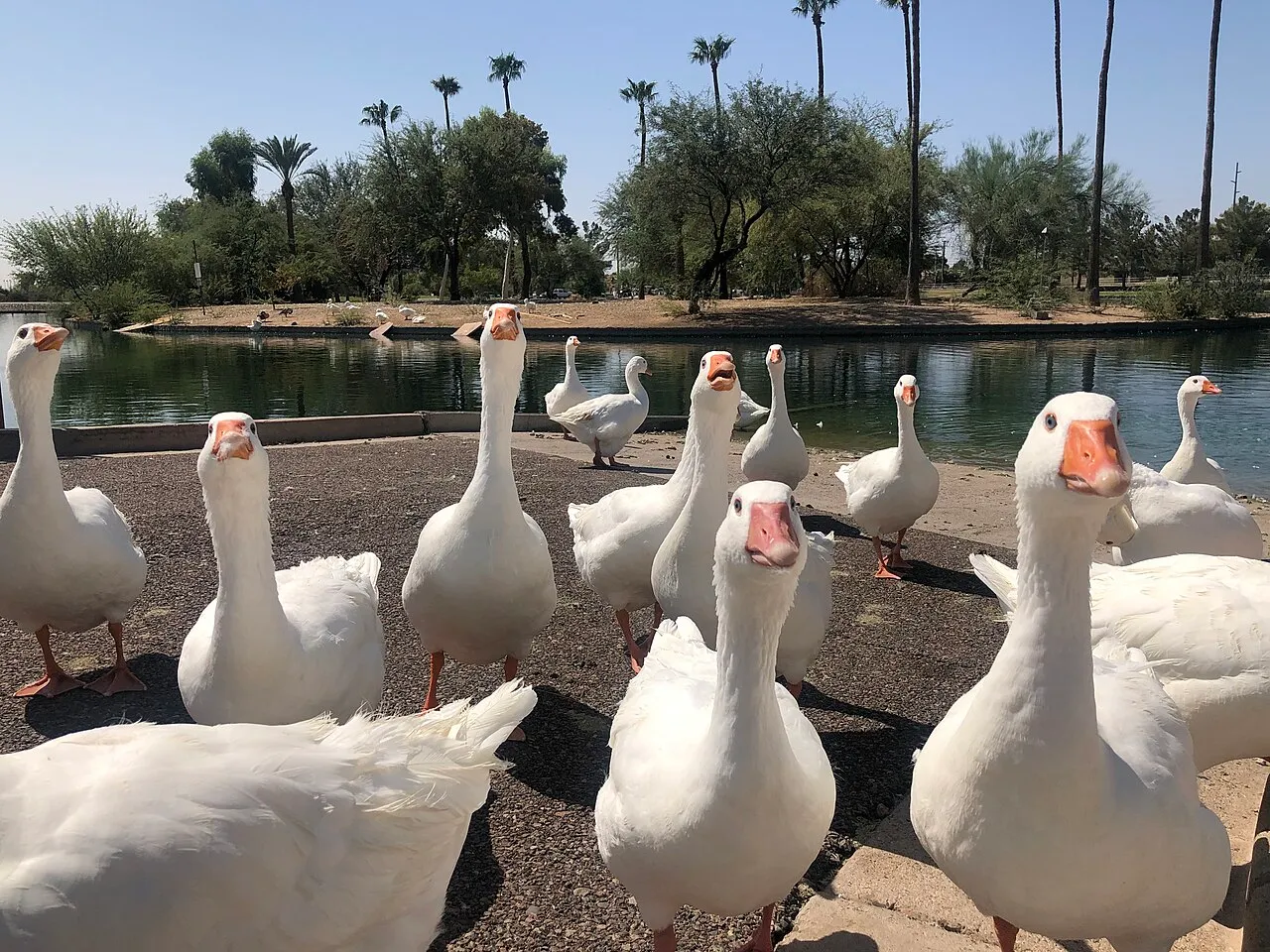
Chaparral Park spreads 100 acres of grass, water and old shade trees across the Indian Bend Wash Greenbelt at Hayden and McDonald, ten minutes north of Old Town. The centerpiece is Chaparral Lake — ten acres of city-owned water with Camelback Mountain sitting photogenically behind it — ringed by a flat mile-long path that fills every morning with strollers, senior walking clubs, and herons that have stopped fearing any of them.
Around the lake, the park stacks up more everyday amenities than anywhere else in the city: the Valley’s favorite off-leash dog park, a landmark inclusive playground built so kids of every ability play together, the Scottsdale Xeriscape Garden, a seasonal aquatic center, ball fields, sand volleyball, fitness stations, and enough ramada-shaded picnic tables to host every quinceañera and birthday in the 85250 zip code — which, on a spring Saturday, it appears to.
It’s free, it’s open sunrise to 10:30 p.m., and it’s the single best answer to “where should we just go today?” that Scottsdale offers.
How to do Chaparral right
Time it like a local. October through April, the park has two golden windows: the first two hours after sunrise (glassy lake, cool air, empty lots) and the last hour before sunset (dog-park social hour, Camelback turning terracotta). Summer flips the rules — dawn or nothing, apart from evening swims at the aquatic center.
The lake is for lines, not limbs. No swimming, no wading, no paddleboards — but the fishing is real. Arizona Game & Fish stocks Chaparral through its Community Fishing Program: channel catfish spring through fall, rainbow trout in the cool months. Kids under 10 fish free; everyone else needs a license (buy it online in five minutes). The northeast corner near the aeration fountain is the local consensus spot.
Pick your zone. Families with small kids: the inclusive playground on the park’s east side, with shade sails and poured-rubber surfacing. Dog people: the three-acre off-leash area near Hayden & McDonald — real grass, small-dog section, water stations. Walkers and runners: the lake loop is a flat mile, and the Greenbelt path lets you extend north toward Indian School Park territory or south all the way to Tempe.
Don’t skip the Xeriscape Garden. Most visitors walk past it without registering that the lush, weird, spiky landscaping along the north shore is a curated botanical collection. In March and April it blooms hard — free, self-guided, and better than half the paid gardens in the Valley.
Parking: main lot off Hayden at the lake, secondary lot off McDonald by the dog park, overflow along Jackrabbit. Weekend ramadas go early — the city takes reservations, and unreserved tables are claimed by 9 a.m.
From flood zone to flagship
Everything you’re standing on at Chaparral used to be a liability. The Indian Bend Wash — the low green ribbon the park sits in — was Scottsdale’s curse for its first seventy years: a dry brushy channel that turned into a river after summer monsoons, stranding school kids and cutting the town in two. Old-timers called it the slough.
In the 1960s the Army Corps of Engineers offered the standard fix — a concrete flood channel, a scar of infrastructure straight through the city. Scottsdale said no. In one of the great municipal judo moves in American planning, the city proposed letting the floodwater keep its path and building parks in it: grass, lakes and golf courses engineered to flood harmlessly a few days a year and host picnics the other 360. Eldorado Park opened first as the prototype; Chaparral’s hundred acres followed as the chain grew, and in 1985 the completed $54 million Greenbelt was formally dedicated.
That origin explains the park’s personality. Chaparral Lake isn’t decorative — it’s part of the flood-management plumbing, doing double duty as a stocked urban fishery. The vast flat lawns are a floodway. Even the modern era kept the theme of infrastructure-in-disguise: in the 2000s Scottsdale buried a full drinking-water treatment plant under the park’s northeast corner, topped it with turf, and went back to hosting birthday parties on the roof.
The park has also become the city’s proving ground for what a public space should be. The 2018 inclusive playground was among the Valley’s first genuinely barrier-free play spaces — ramped decks, adaptive swings, sensory play — and set the standard the city now applies elsewhere. The Xeriscape Garden, wrapped around a lake in a park built on floodwater, quietly teaches the other half of the desert-water lesson: this is what landscaping looks like when you stop pretending you don’t live in the Sonoran Desert.
Why it matters
Cities usually get one signature park per era. Chaparral is Scottsdale’s argument that flood control, water treatment, conservation education and pure everyday joy can occupy the same hundred acres — and that the best infrastructure is the kind you can throw a frisbee on. Sunrise, east shore, dog at your knee, Camelback doubled in the water: it’s the most Scottsdale view there is that doesn’t cost a resort fee.